
December 1, 2024 • Norm
Day 17 — Rome Was Supposed to Be the Easy Stop. Then We Put Grandma on a Scooter.
There is a strange confidence that comes after surviving Morocco, Egypt, and Petra with three generations of family.
You begin to think, “We’ve handled camels, sleeper trains, feluccas, donkey stairs, hot air balloons, illegal taxis, airport chaos, and a driver who needed to be reminded not to watch videos while driving. Rome should be simple.”
This is how travel tricks you.
Rome is never simple.
Rome is ancient beauty wrapped in traffic, cobblestones, fountains, churches, ruins, gelato, and enough history to make your feet suspicious before you even start walking.
But first, we had to get there.
Leaving Petra Without Enough Time to Process Petra
Our driver picked us up in the morning for the journey back toward the airport and our afternoon flight to Rome.
Petra had been one of those places that needed more time than we had. We had gone in through the back door, accidentally paid for a not-quite-official ride, walked farther than expected, and watched my 81-year-old mother ride a donkey named Zuzu up ancient stone steps.
By this point in the trip, my mother had become an adventure icon.
She had ridden camels in the Sahara, floated in hot air balloons over Morocco and Egypt, survived sleeper trains, walked markets, negotiated ancient sites, and now added “donkey ascent into Petra” to her resume.
Most people collect fridge magnets.
My mother collects transportation methods that make insurance companies nervous.
We were tired when we left Jordan, but in the satisfied way that comes after a trip has already given you more stories than you can properly organize.
And somehow, the adventure was not finished.
Because Rome was waiting.
Our Hotel Was in the Old City, Which Is the Best Kind of Dangerous
We arrived in Rome in the evening and made our way to our hotel.
The location was fantastic. We were right in the old city, which meant we could walk almost immediately into the kind of Rome people dream about: narrow streets, stone buildings, glowing lights, restaurants tucked into corners, people strolling as if they had nowhere urgent to be, and history casually standing around like it owned the place.
Which, to be fair, it kind of does.
After weeks of moving through North Africa and the Middle East, Rome felt familiar and completely different at the same time. Europe has its own rhythm. The streets, the food, the evening atmosphere, the way people gather around plazas — it felt like we had stepped into a different chapter of the same grand adventure.
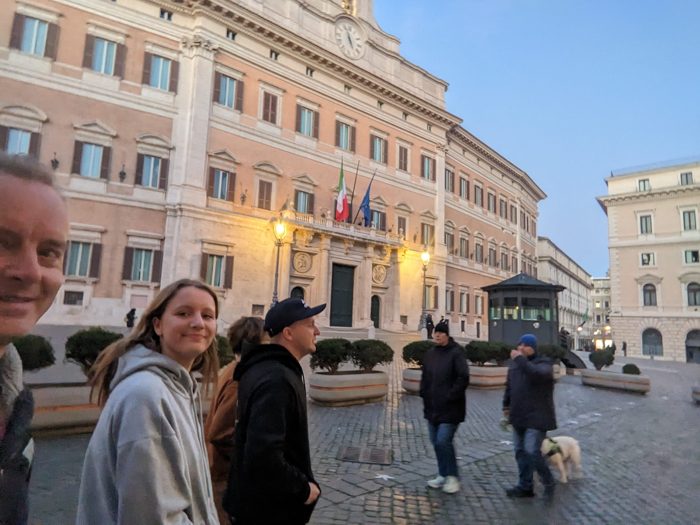
We were tired, but not tired enough to stay in.
This is one of the dangers of a good hotel location. If the main sights are far away, sleep can make a convincing argument. But if Rome is sitting outside your door, glowing in the evening, sleep loses.
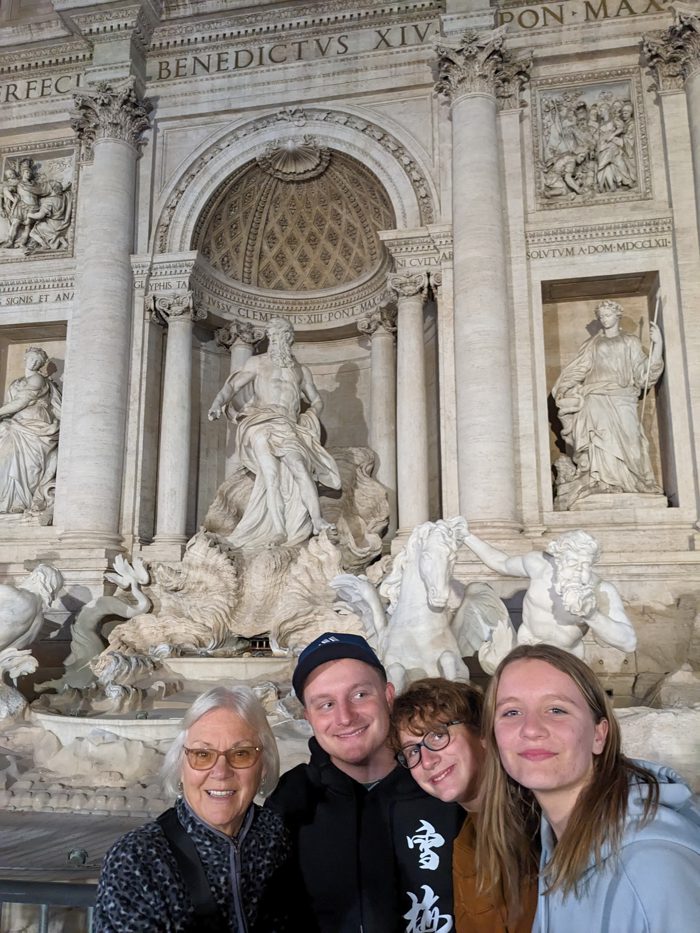
So we walked to the Trevi Fountain.
The Trevi Fountain Was Under Construction, Because Of Course It Was
The Trevi Fountain is one of Rome’s most famous landmarks.
It is also supposed to have water.
When we arrived, it did not.
The fountain was being renovated, which meant the grand rushing water was absent. Instead of the dramatic scene I had imagined, we found barriers, restoration work, and walkways placed over parts of the fountain area so visitors could still get closer and take photos.
At first, it was disappointing.
You travel all the way to Rome, walk through the old city at night, arrive at one of the most iconic fountains in the world, and discover it is having what amounts to a spa day.
No water.
No roaring fountain.
No magical coin toss into the shimmering pool.
Just Rome saying, “You may admire the masterpiece, but please excuse the maintenance.”
And yet, it was still beautiful.
The sculptures were still dramatic. The setting was still incredible. The evening lights still gave the whole place that unmistakable Roman glow. And the walkways actually allowed us to get some interesting photos from angles we might not normally have had.
This is one of the secrets of travel: disappointment often brings a consolation prize if you are willing to stop grumbling long enough to notice it.
Would I have preferred water?
Absolutely.
Did we still take photos and enjoy the moment?
Of course.
We are professionals at making the best of slightly broken plans.
Rome at Night Is a Dangerous Thing for Tired People
After the Trevi Fountain, we wandered through the city.
Rome at night has a way of pulling you onward. One street leads to another. One lit building appears in the distance. One church façade catches your eye. One narrow lane looks too charming not to explore.
Before long, tired people who should be in bed are still walking.
This is how Rome gets you.
It does not need to shout. It simply places beautiful things every few steps until your body gives up trying to make practical decisions.
The kids had been through so much already that I was impressed they were still moving. My mother, somehow, continued along as if this was all perfectly reasonable. At this point, I was beginning to suspect she had been secretly training for this trip by doing endurance walking through grocery stores.
We eventually returned to the hotel, knowing the next day would be our only full day in Rome.
This created a dangerous idea.
We needed to see as much as possible.
We needed to move efficiently.
We needed transportation.
And that is when Orin’s brain produced the sentence that would define Rome for us:
“We should use scooters.”
In the next installment, we attempt to see Rome in one day by electric scooter, with Zakary sharing mine, Teyauna driving her own, and my 82-year-old mother riding behind Orin through cobblestone streets like a Roman charioteer with better balance than any of us deserved.