
May 14, 2026 • Norm
Day 26 — Rugova Canyon: Shpellat, Peja 360, and the €3.90 Burger
Thursday, May 14, 2026
Route: Peja → Rugova Canyon → Peja
Daniel started the morning as chef, which was becoming one of the better developments of the trip.
He made yogurt with strawberries, oranges, and bananas, and I have to admit, it was excellent. There are worse ways to begin a day of hanging from cliffs than eating fruit and pretending you are making healthy life choices.
We also packed wraps with feta cheese for lunch.
“Prepared,” Daniel said.
“Professional,” I added.
“Questionable,” the mountain would later reply.
Our apartment was only about five minutes from Rugova Canyon, which is both convenient and dangerous. Convenient because adventure is close. Dangerous because it encourages you to think, “We can probably do two via ferratas today.”
Rugova Canyon sits just outside Peja, carved by the Lumbardhi i Pejës River through steep limestone walls near the mountains of western Kosovo. The canyon is dramatic immediately. You do not need to hike for hours to find scenery. You drive a few minutes and suddenly the cliffs rise around you like the canyon has been waiting to show off.
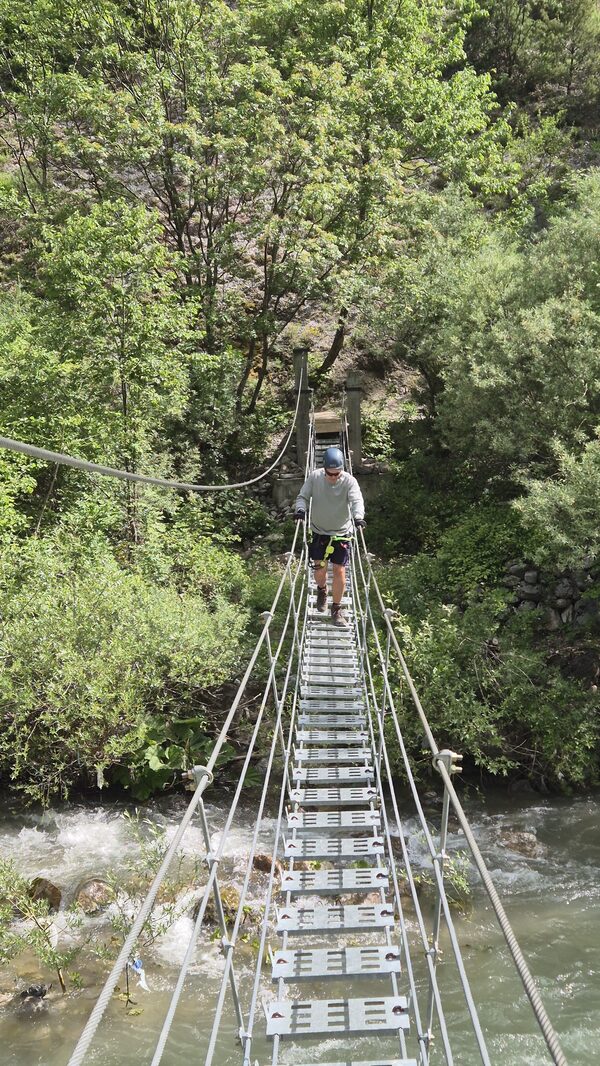
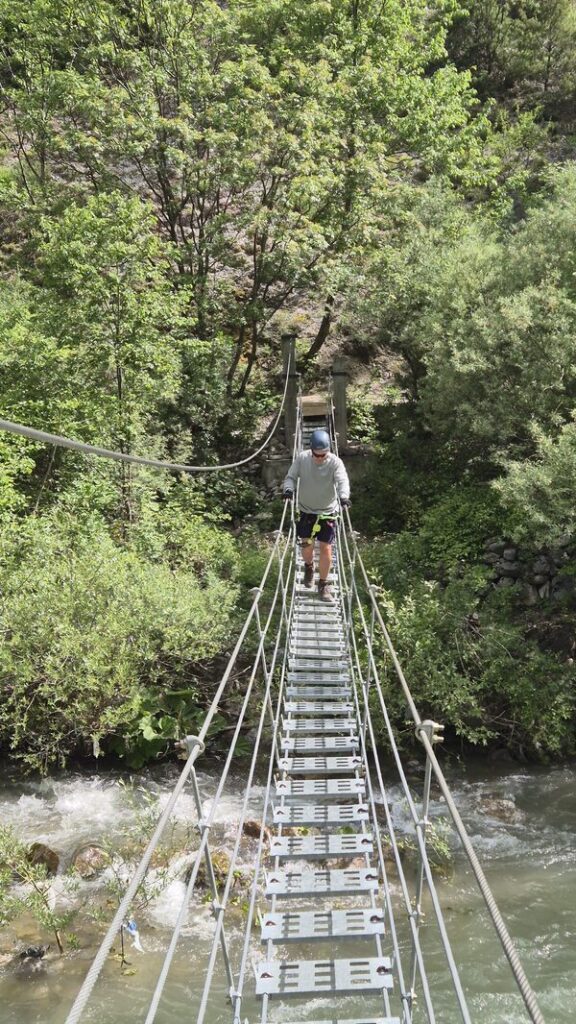
Via Ferrata Shpellat
We had learned there were several via ferratas in the valley, and we began with Via Ferrata Shpellat.
It was a good choice.
It was also the kind of good choice that makes you sweat for reasons not entirely related to exercise.
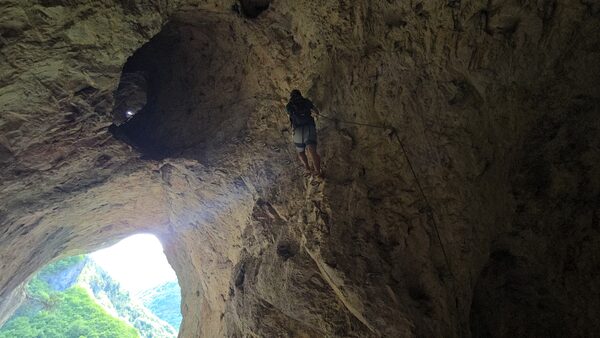
The route included several cave sections, which made it feel adventurous from the start. We climbed along the cliff, moved through or beside cave openings, clipped our carabiners along the cable, and tried to maintain the facial expression of men who had not recently questioned their decisions.
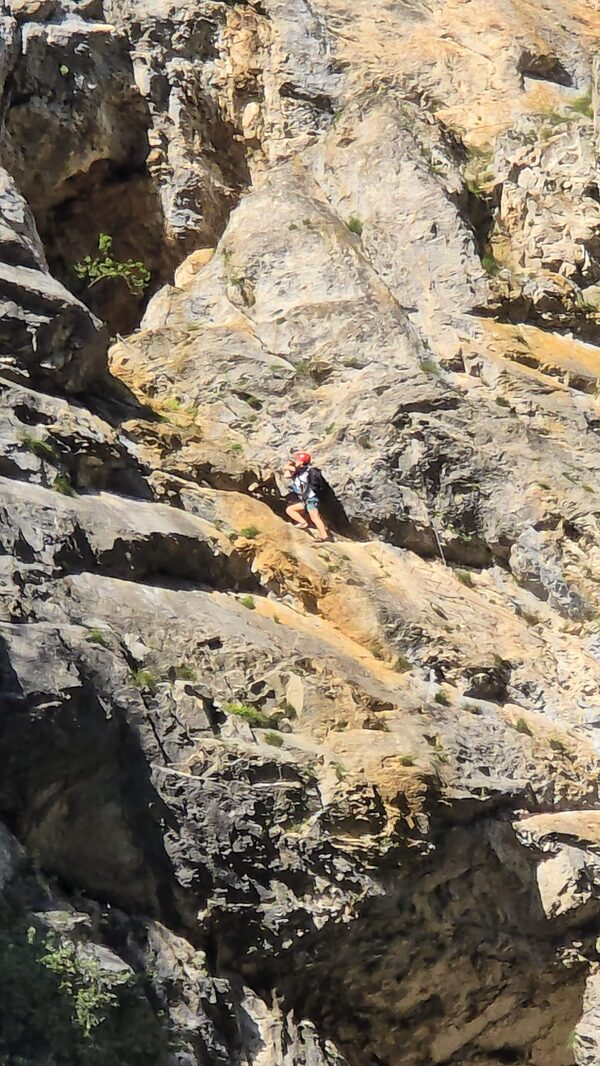
Some sections were physical, but the real challenge was mental. The cliffs dropped straight down — in places 200 meters or more — and there were moments where the only sensible strategy was not to look too long at the empty air below.
Unfortunately, via ferrata requires you to look at your feet.
Your feet are often directly above the empty air.
This is poor psychological design.
The most intense moment came after one cave. We came out along the rock, turned a corner, and the cliff opened below us. I could not see more than one step ahead.
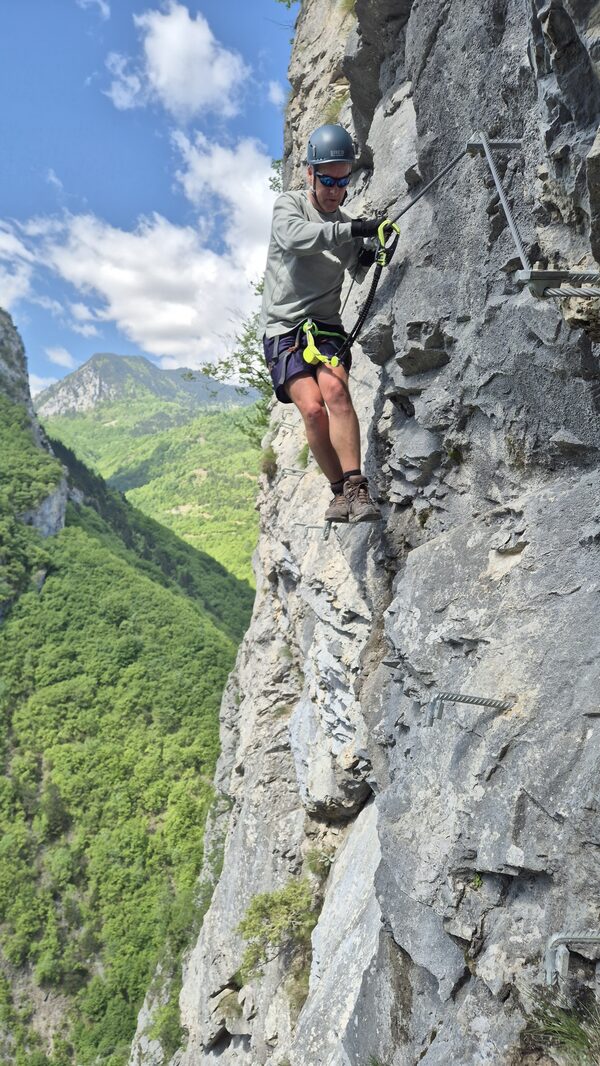
“I am not sure I like this,” I said.
Daniel, who was clipped to the same cliff and therefore not in a position to offer many alternatives, gave the only useful advice available.
“One step at a time.”
That is the truth of via ferrata. You do not conquer the whole mountain. You move one foot. Clip one carabiner. Move one hand. Breathe. Repeat until fear becomes motion and motion becomes confidence.
Or at least enough confidence to keep going.
It took us about an hour and a half to complete Shpellat. At the top, I flew the drone for footage, because apparently after surviving the cliff, my first instinct was to send a small flying camera over it and relive the height from another angle.
The walk down took about 30 minutes.
After that, we drove to the visitor center at the entrance of the canyon. A helpful woman connected us with a local guide so I could do a podcast interview. While we waited, we ate our feta wraps, which tasted much better after earning them.
The guide arrived about 20 minutes later and took us back into the canyon for a better backdrop. I filmed the interview with Rugova Canyon rising behind us. It is hard to ask for a better studio than limestone cliffs and mountain air.
Under the Big Tibetan Bridge
Then we went looking for the Big Tibetan Bridge.
The bridge spans Rugova Gorge, crossing above the road and river between canyon walls. It is around 40 meters long and roughly 60 meters high, and it is connected to the area’s adventure routes.
The bridge was locked.
This was because visitors are supposed to pick up the key at the visitor center and use proper gear.
We had not picked up the key.
“We just want pictures,” I said.
The fence did not care.
There was barbed wire and a large gate. Climbing over was not an option. Going under, however, appeared physically possible.
I am not saying this was our proudest moment.
I am saying we went under.
The bridge was fantastic. Standing above the gorge, with the road and river below and cliffs around us, gave us one of the best views of the day. It felt suspended between adventure and poor paperwork.
Peja 360 and a Ladder in the Rock
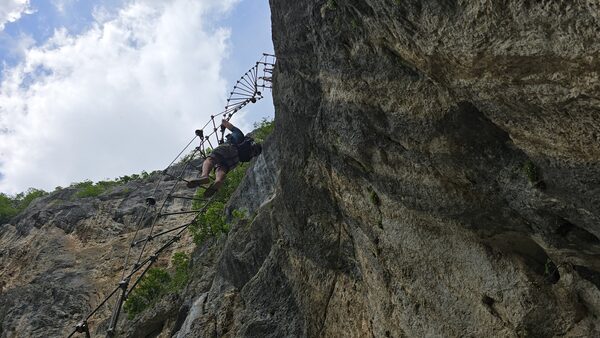
We skipped the longer, harder Marimangat route and went to Via Ferrata Peja 360 instead. This one had two unforgettable features: a twisting 360-degree ladder like a metal DNA strand, and a cave section where we climbed into one opening and came out another.
The ladder looked ridiculous and brilliant. Climbing it felt like participating in a science exhibit designed by mountain people.
The cave exit was just fun. One moment we were on rock, the next inside the mountain, and then suddenly popping out somewhere else like the cliff had performed a magic trick.
By the time we returned to Peja, we had done two via ferratas, crossed a bridge we technically should have accessed more officially, filmed a podcast, eaten packed wraps, and spent enough time clipped to cables to deserve dinner.
The €3.90 Burger
Dinner was at a burger grill.
I ordered a double burger with fries for €3.90.
I stared at the price like it was a typo.
Daniel ordered too. With extra fries, my Coke, and his tap water, the total was about €10 for both of us.
“Should we tell them?” I asked.
“Tell them what?”
“That food is supposed to cost more.”
Daniel shook his head.
“Do not interfere with blessings.”
Fair point.
It was a perfect end to our time in Peja: cliffs, caves, bridges, interviews, cheap burgers, and the sense that Kosovo had surprised us in the best possible way.
Tomorrow, we had more plans.
Because apparently, after two via ferratas in one day, our main conclusion was: “Good. What’s next?”