
April 14, 2007 • Norm
Aranui 3 Day 8: The Wettest History Lesson in Hiva Oa
Day 8 · Hiva Oa: Puamau and Hanaiapa · 14 April 2007
There are shore landings, and then there are shore landings where parents quietly calculate how many children they own and whether all of them are still above water.
Puamau gave us the second kind.
We woke to a beautiful Hiva Oa harbour, with a pointed rock pillar rising from the water near the entrance. The scenery was calm.
The landing was not.
The whaleboat bounced against the concrete in four-foot swells while sailors helped everyone ashore. Watching one crewman pass our youngest children to another on land was exciting in the way parents do not necessarily request.
Our older children enjoyed timing their steps off the boat.
I enjoyed when everyone was safely standing on land.
The Tiki Before the Crowd
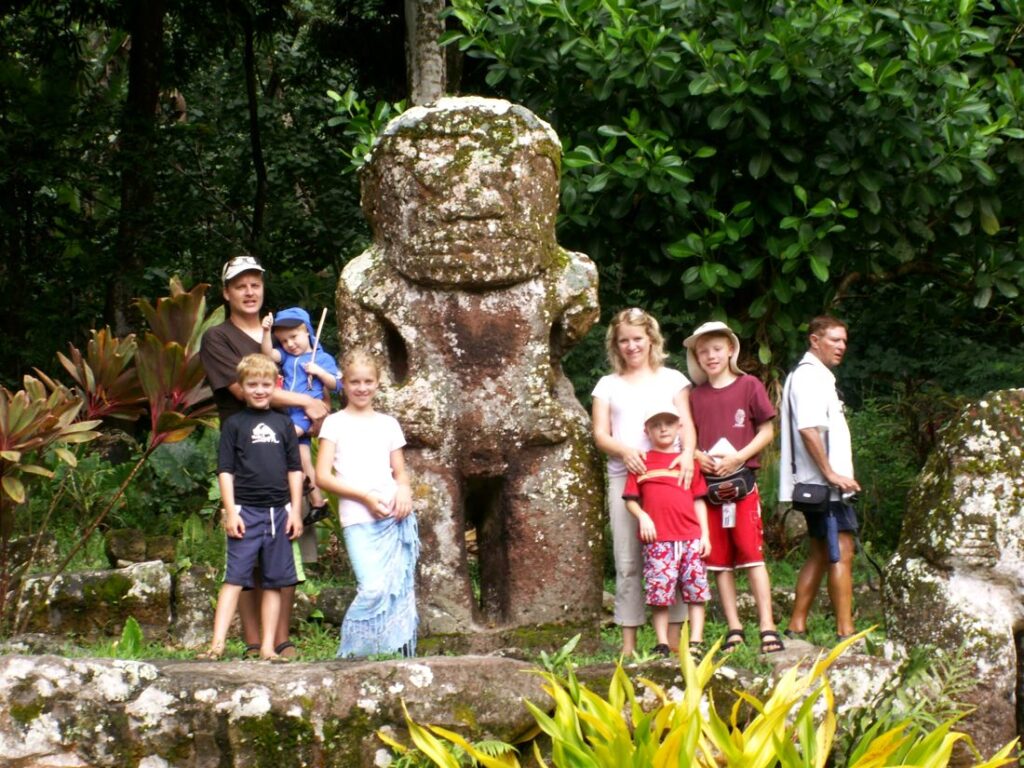
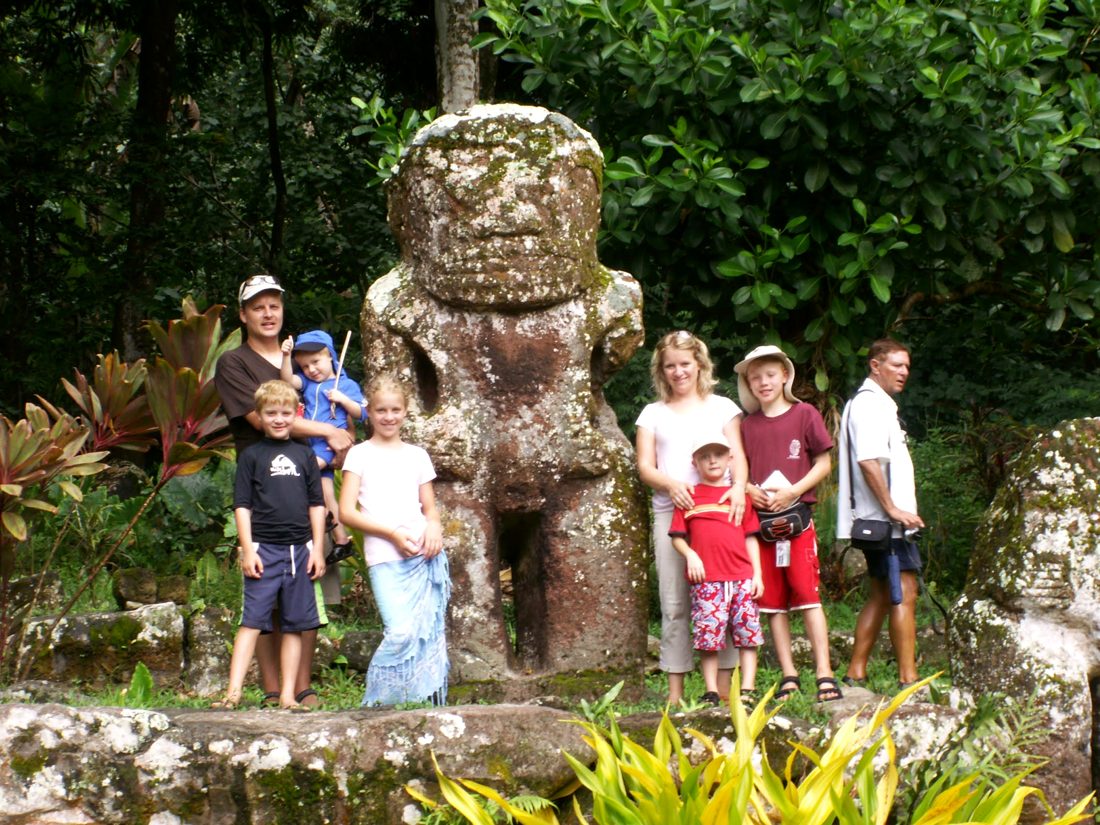
We drove six kilometres by 4×4 to the Iipona archaeological site, said to be one of the best precontact Marquesan sites, with the largest tiki in the islands at over six feet tall.
Rain threatened, so I carried camera gear in a plastic bag, which is not elegant but is effective.
We were among the first to arrive, giving me about one minute to take wide photos before the rest of the Aranui passengers poured in.
One minute.
Photography as a competitive sport.
Didier, Rain, and Ancient Rivalries
The site’s tikis represented ancestors of the Nike tribe, who had once been powerful and frequently at war with neighbouring tribes. After they captured and ate a rival chief, several neighbouring tribes joined forces and drove them away.
History has a way of escalating quickly.
I listened to Didier’s detailed French lecture while my family heard the shorter English version. The carvings were impressive, especially considering the labour required to shape and move such heavy stone.
Then the rain arrived.
First a warning shower. Then a full ten-minute downpour.
We ran for shelter, but by the time we reached it, we were soaked. A nearby carver packed up and left. He was clearly more experienced than we were.
Piglet Priorities
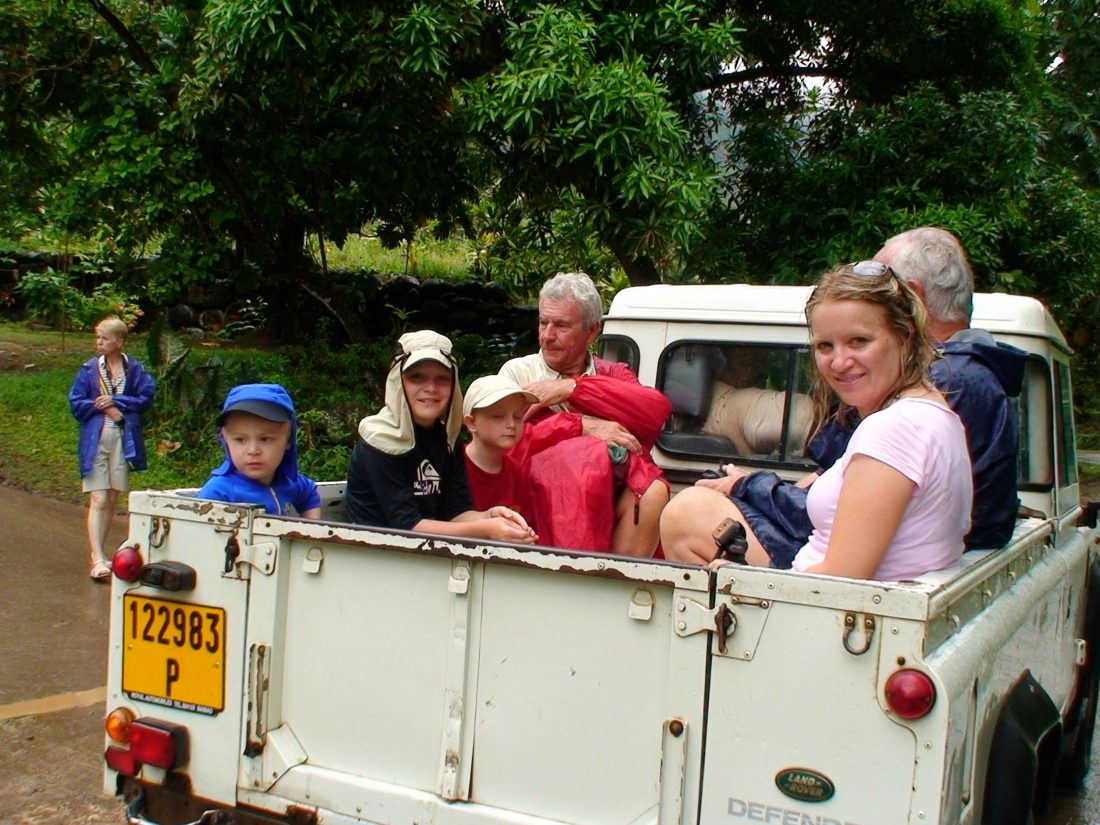
We rode wet in the back of a pickup truck to Tohua Pehe Kua, the gravesite of the valley’s last chief and queen. It was also conveniently in a pension’s backyard.
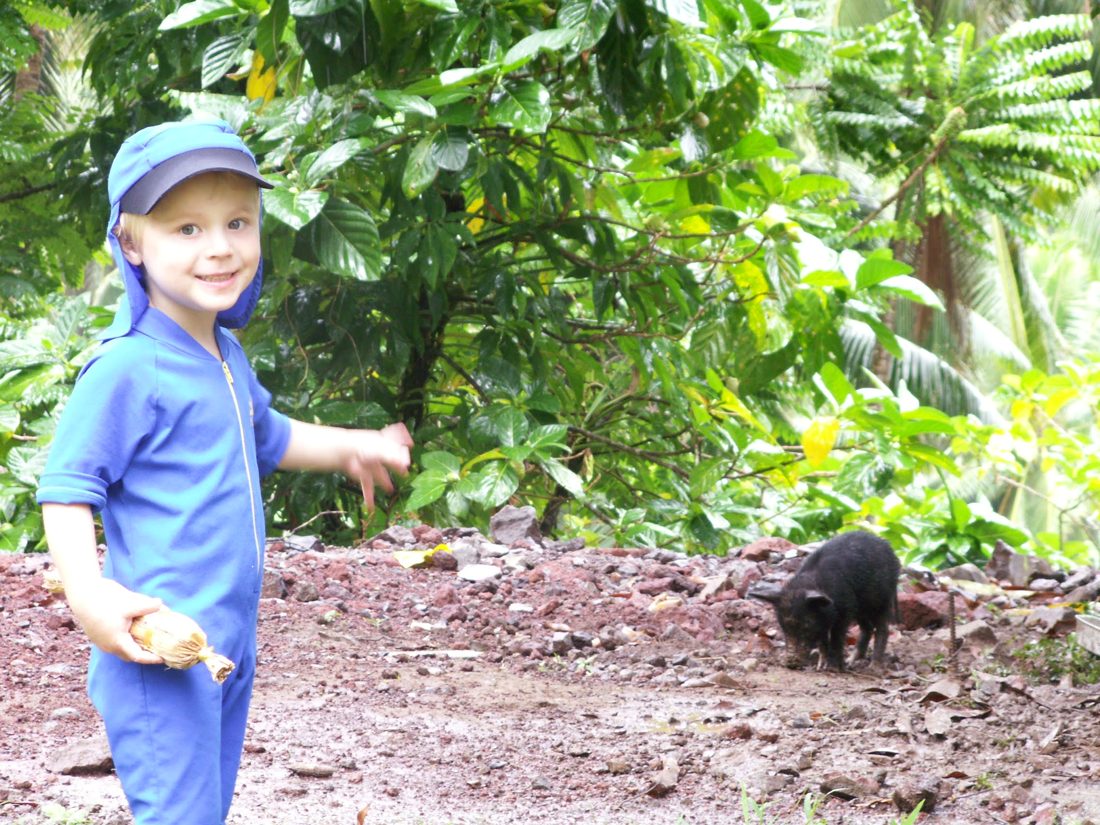
The children were less interested in the historical importance and more interested in the four-week-old piglet tied to a post.
This is understandable.
Tiny piglet beats grave marker for most four-year-olds.
After that, we were very ready for dry clothes.
Hanaiapa, the Quiet Valley
Our second stop was Hanaiapa, a sleepy village that did not sit right on the shore. Near the water, boys rode small surfboards in the waves while a family picnicked by the sea.
The road inland was lined with yellow flowers fallen from trees. A stream ran beside the path. Farther inland, houses appeared among hibiscus and other flowering plants.
At the village centre, artisans displayed tapa paintings and sold coconuts with straws for 150 CPF. People drank the coconut water, then broke open the shell to eat the inside.
It was quiet, simple, and relaxed.
No cargo seemed destined for Hanaiapa that day. Nobody waited anxiously at the pier.
After the wet drama of the morning, that quiet road, the stream, and the boys surfing in the bay felt like a gift.