
April 13, 2007 • Norm
Aranui 3 Day 7: The Hike Across Fatu Hiva That Earned Its View
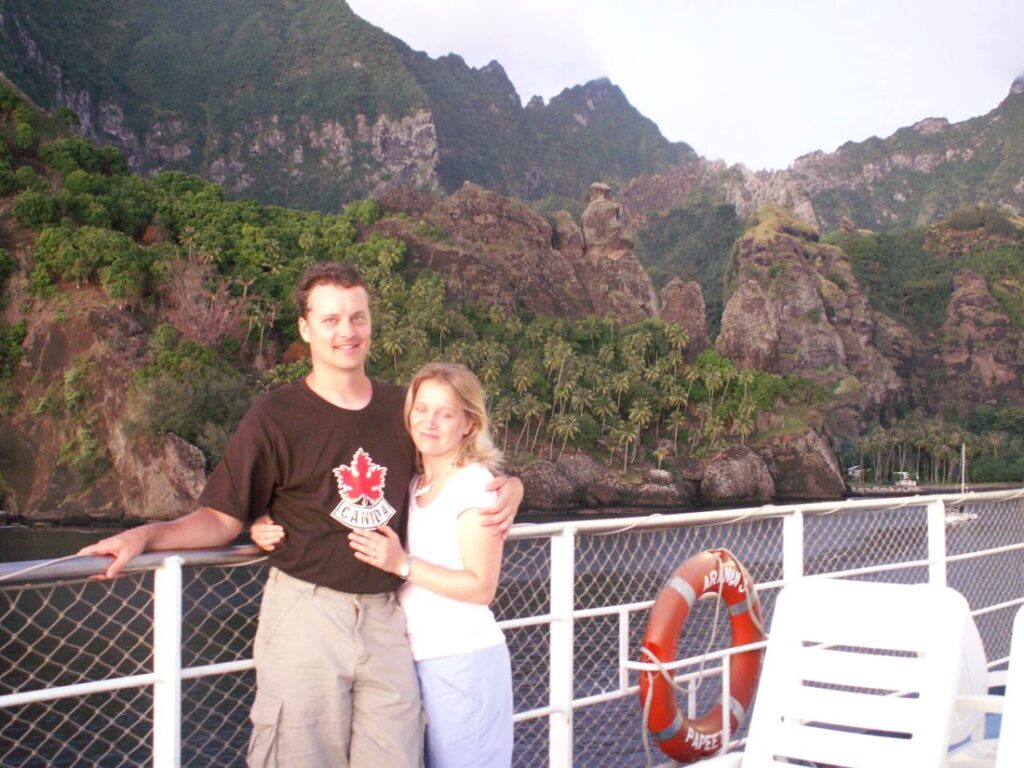
Day 7 · Fatu Hiva: Omoa and Hanavave · 13 April 2007
Some views should not be reachable by car.
They should require sweat, questionable decisions, and at least one moment where you wonder whether your legs have filed a complaint.
Fatu Hiva was a pearl of the Marquesas. With no airport, two villages of about 250 people each, and a remote feel unlike anywhere else on our itinerary, it was the most adventurous island we visited.
My son Jaeden and I landed early in Omoa with about 20 other hikers. We planned to walk 17 kilometres across the mountains to Hanavave.
This sounded reasonable at breakfast.
Breakfast is dangerous that way.
Omoa Before the Climb
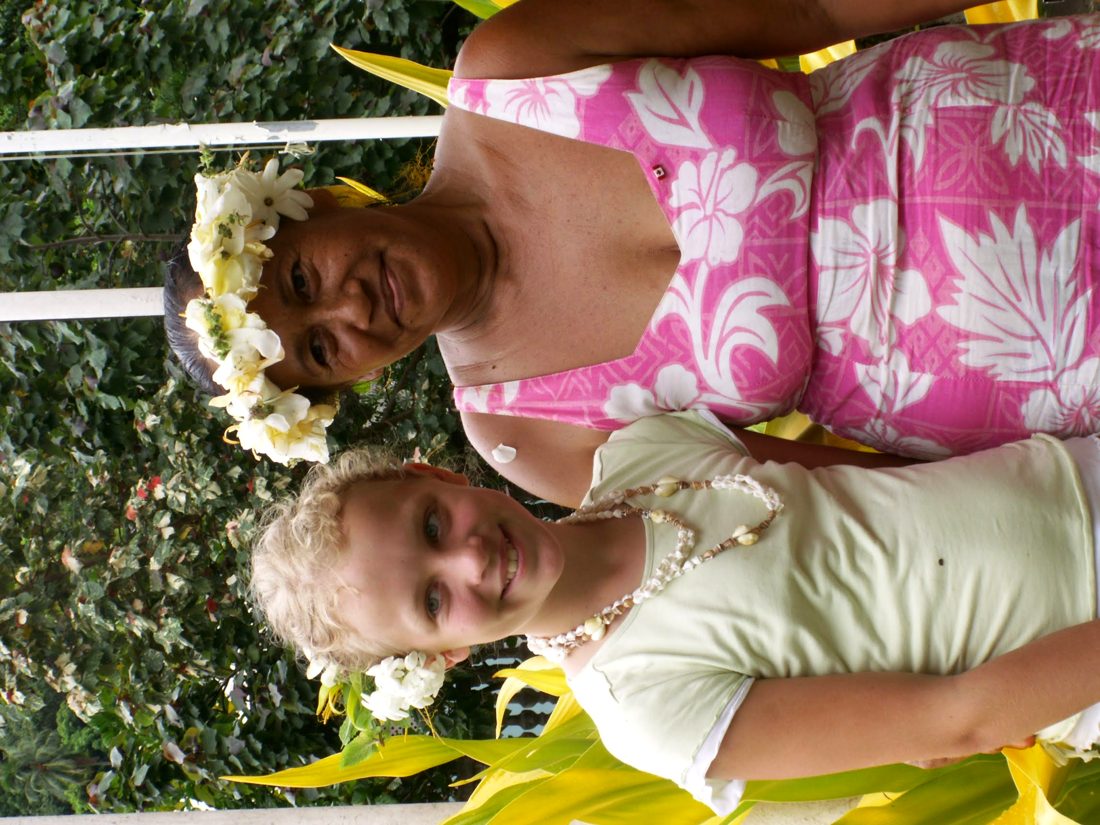
Omoa felt traditional and welcoming. Villagers showed handicrafts, demonstrated tapa cloth making by pounding bark for hours, and prepared scented flower bundles using flowers, herbs, pineapple, and sandalwood powder.
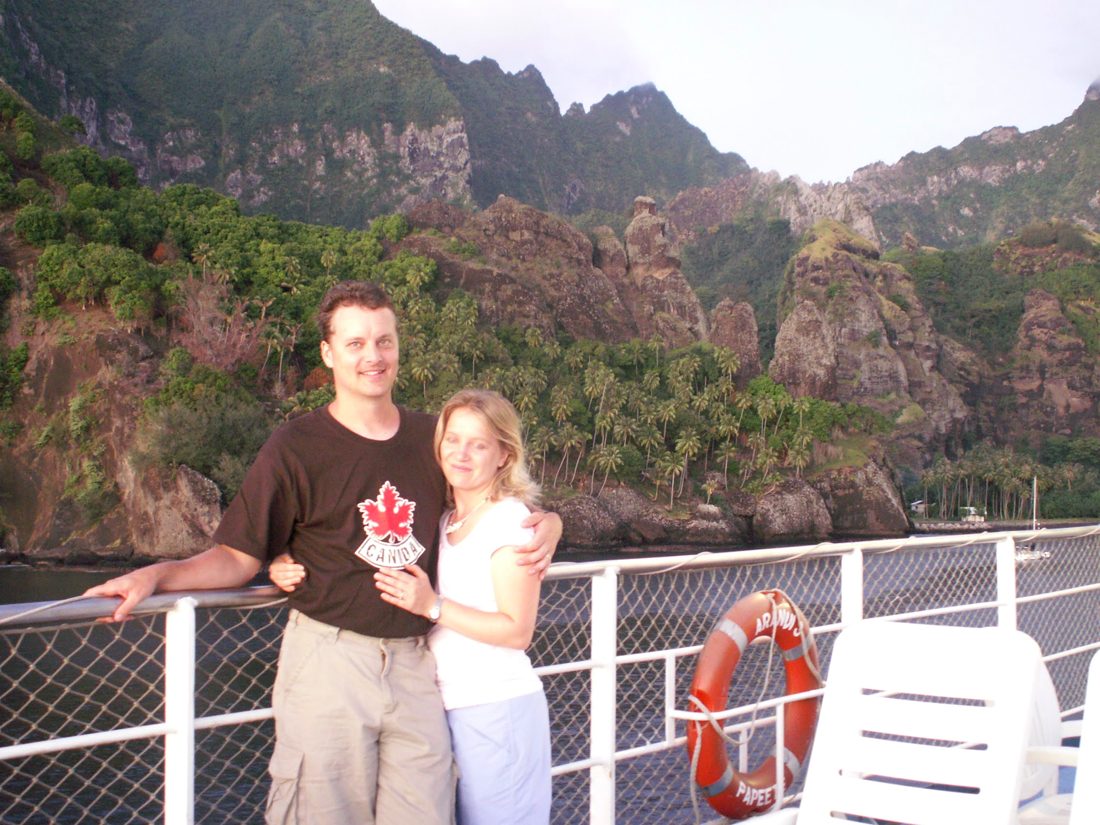
We also visited a small museum with artefacts from the late 1800s and early 1900s: carved paddles, bowls, trading items, and old photographs.
Then the hike began.
Red Dirt and Helpful Clouds
For the first two hours, we climbed steadily along a red soil road. At first, the path followed the ocean, then turned inland through valleys and mountains.
Thankfully, the weather was kind. Clouds covered much of the sky. Twice, light rain sprinkled us, then moved on, leaving us damp and grateful. When a breeze came through the valley, Jaeden and I stopped with arms outstretched like we had discovered air for the first time.
The road climbed corner after corner. Every time we thought we had reached the top, the island gently corrected us.
We also kept crossing power lines, which felt bizarre in a place so remote.
At times, the path dropped steeply beside us into valleys far below. One careless step would have resulted in a very fast and very permanent shortcut.
We did not take it.
Lunch at the Top
Lunch was waiting for us near the top, along with more water, which tasted like a miracle.
Then came the descent.
At first, it was gentle. Then the road became steeper and looser. We took one old 4×4 shortcut that felt less like walking and more like controlled sliding.
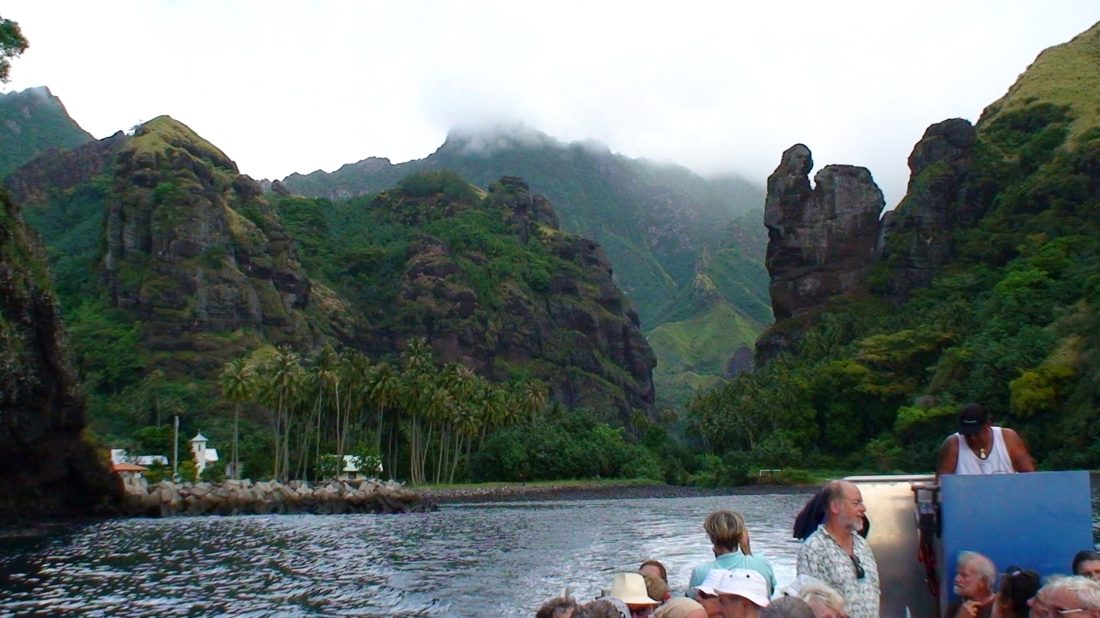
Finally, we reached the viewpoint above Virgins Bay.
It was worth every step.
Basalt pillars rose like a crown. Mountains circled the bay. Far below, Hanavave waited in a green valley by the water.
It was one of the best views of the entire trip.
Down Into Hanavave
The final descent was rough, with loose rocks and uneven boulders. One older hiker accepted a ride on a local motorbike, which skidded carefully downhill with its brakes working hard.
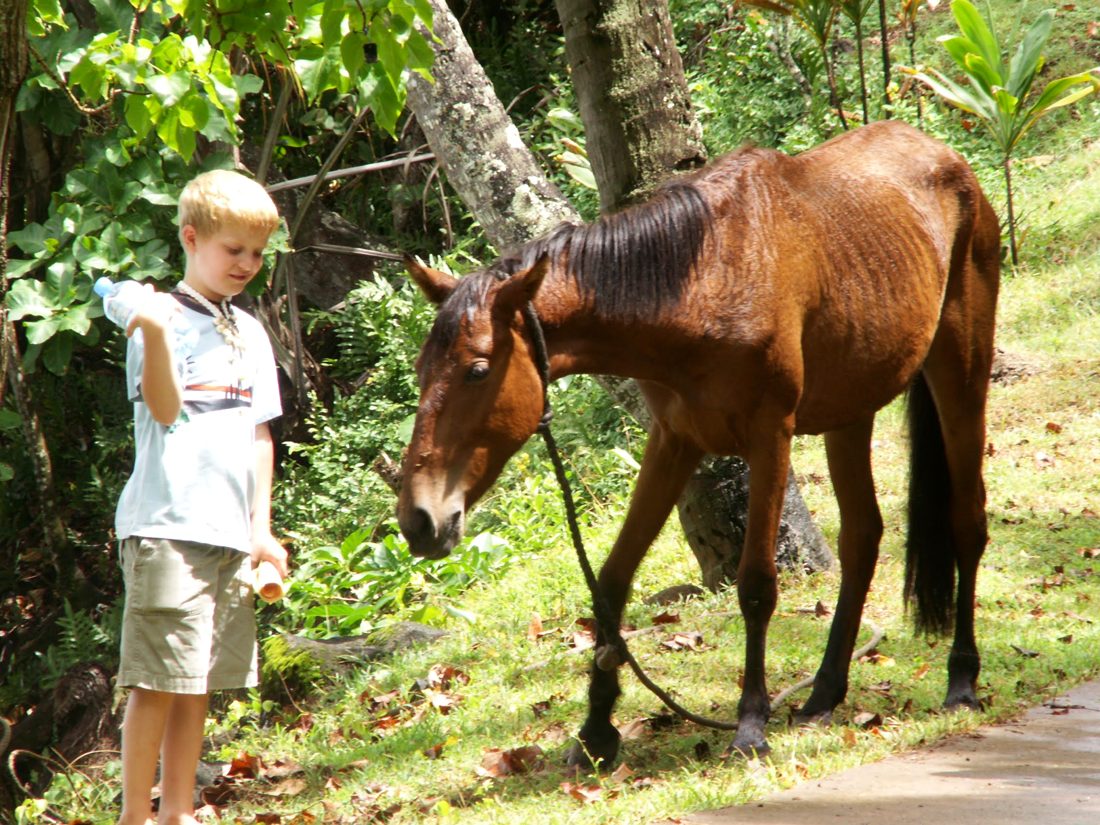
As we reached the valley, palm, noni, and banana trees appeared around a freshwater stream. A horse stood tied in a field, likely someone’s main transportation.
Hanavave itself felt like a step back in time. The whole village had gathered near the waterfront basketball court, with music, dancing, crafts, coconuts to drink, and smiles everywhere.
The towering pinnacles around Virgins Bay made the place unforgettable.
Most passengers wanted to stay.
So did I.
But the Aranui was waiting, and so was the next island.
As we left, I saw a young man wearing a flower lei saying quiet goodbyes to village children. He was heading to Papeete, like many island youth eventually must for school.
It was a beautiful and sad goodbye.
Fatu Hiva gave us a hard hike, a perfect view, and a reminder that paradise is still a place people have to leave.