
April 23, 2026 • Norm
Day 5 — Birds, Musketeers, Medieval Lunch, Fire, Horses, and One Sprained Ankle
Thursday, April 23, 2026
Our second day at Puy du Fou began with a beautiful buffet breakfast at the hotel. After several days of early mornings, long walks, trains, museums, and castles, it felt good to have a slower start. The breakfast was delicious — even “delectable,” according to the family food critics, who were becoming increasingly confident in their European dining opinions.
Falcons Filling the Sky
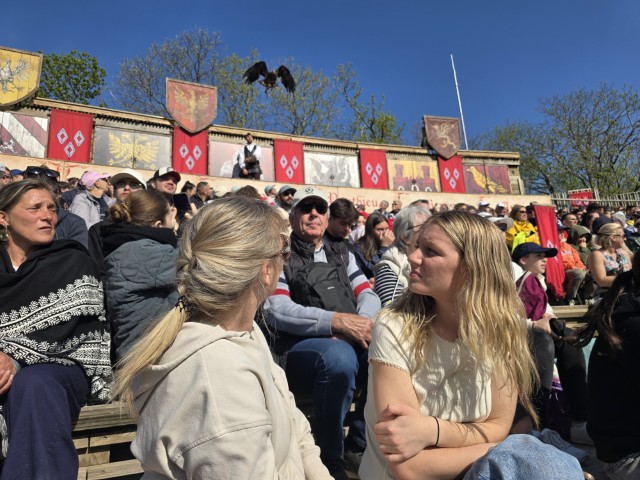
The first major show of the day was the bird and falconry show, which quickly became one of the favorites, especially for Kirsten. There were doves, storks, vultures, falcons, and what felt like hundreds of birds sweeping through the sky and over the audience.
The birds did not just fly around in the distance. They swooped low, crossed above our heads, filled the air, and turned the whole show into a moving sky of wings. There is something slightly humbling about watching birds perform with more discipline than most humans can manage before breakfast.
There was also a beautiful scene with a princess and a modern dance element that gave the show a softer, more artistic feeling. It was graceful, surprising, and a completely different kind of spectacle from the Vikings and Romans of the day before.
That became one of the things we kept noticing at Puy du Fou: every show was huge, but each one was huge in a different way.
Some shows were built around fire and battle. Some used horses. Some used birds. Some used water. Some used moving theaters, rotating stages, or surprise effects that made us wonder how they had managed to build any of it. It began to feel like somewhere backstage there was a team of people whose only job was to ask, “What if the entire building suddenly moved?” and then another person said, “Also, add horses.”
A Silent Film, Performed Live
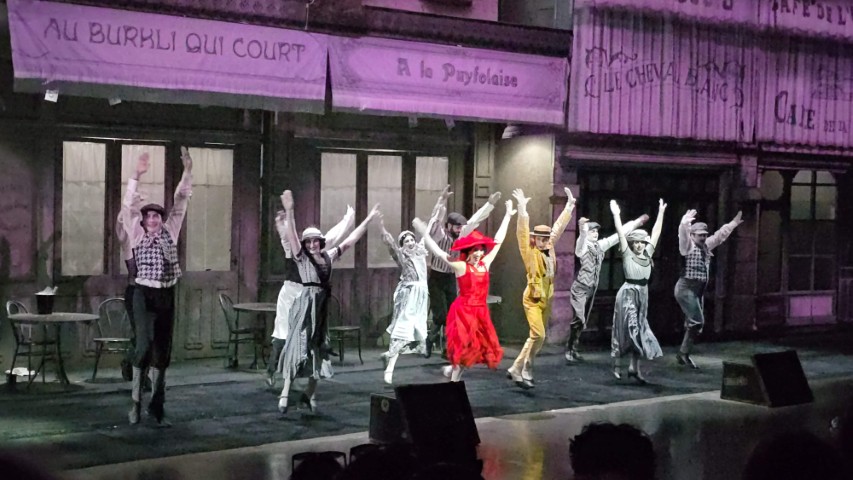
We also saw the black-and-white silent film-style show, with mimes, music, old movie effects, and clever visual surprises. Everything looked like an early 1900s film set. The actors used sound effects, movement, and live physical comedy to make it feel like we were watching an old movie come to life.
One of the best moments was when nearly everything stayed black and white, and then suddenly a dress changed color. It felt almost like a magic trick. The show also pulled people from the audience before it began, which made it even more fun and unpredictable. At Puy du Fou, sitting quietly in your seat does not guarantee safety from becoming part of the show.
Lunch was its own performance too. We went to a lunch experience where actors served and performed between courses. There were traditional French songs, little scenes, jokes, and a running bit about hiding the beans so they would not have to pay taxes. It was funny, lively, and a very French reminder that even lunch could become theater.
The Musketeers and a Flooded Stage
Then came the Three Musketeers show, which was one of Teyauna’s favorites.
It was inside a huge indoor theater, and it kept surprising us. At first, it looked like the action was coming out of a screen, then the stage transformed. There were sword fights, horses, elaborate costumes, and bandits dropping from ropes around the theater. Some appeared near the audience, then ran into the action on stage.
Then the set flooded with water.
Suddenly, horses were galloping through the water, looking majestic and powerful as the stage became something completely different. There were horse tricks, sword fights, changing scenery, and so much happening at once that it was hard to know where to look. It was the kind of show where your eyes keep saying, “Over there! No, over there! Wait, did that horse just do that?”
That was another thing we loved about these shows: every performer seemed to be doing something. If you looked at the main fight, there was action. If you looked behind the main fight, there were stunts. If you looked to the side, someone was climbing, falling, dancing, riding, or preparing for the next surprise.
We also visited the château walk-through experience, which took us through rooms and scenes that felt historic and atmospheric, even if some of the French storytelling was harder to follow. Even when we did not understand every word, the design and mood still carried the experience.
Knights, Jousting, and a Sprained Ankle
Another major show took us into a medieval battle world, with knights, jousting, castle walls, and Joan of Arc-era drama. There were battle scenes, riders, flames, and a wall that came down as the whole thing turned into a massive fight sequence. And yes, the fire effects were once again very enthusiastic. The pyrotechnicians at Puy du Fou do not appear to be shy people.
The horses were everywhere throughout the park. They raced, reared, jumped, pulled chariots, splashed through water, charged through battle scenes, and carried riders through incredibly precise choreography. We learned that Puy du Fou has hundreds of horses and many other animals, all part of the enormous operation behind the shows.
By the end of our day and a half at the park, we had seen every major show. It felt like one and a half to two days was the right amount of time — enough to enjoy everything without feeling like we were sprinting from one show to another.
At some point that day, Kirsten sprained her ankle, which slowed things down a little. Given the amount of walking, stairs, uneven paths, and show-hopping we had been doing, it was probably less a surprise and more a matter of time before someone’s ankle filed a formal complaint.
That evening, we went back to the room for a couple of hours before heading out to dinner at La Mijoterie du Roy Henry. The meal was served with a medieval-style feel, where we chose an appetizer, main dish, and dessert to place on a wooden tray.
Reviews from the family were mixed. One opinion was that the restaurant was not a favorite. Another opinion, delivered with great confidence, was that the food was amazing — especially the chicken, potatoes, starter, and dessert. The phrase “medieval food is the best” was officially entered into the family record.
It was a packed day: birds, mimes, music, musketeers, horses, jousting, fire, lunch theater, château rooms, medieval dinner, and one sprained ankle. Puy du Fou had turned out to be unlike any theme park we had ever visited — less about rides, more about spectacle, storytelling, history, and constant surprise.