
November 26, 2024 • Norm
Day 12 — The Nile Gave Us Blankets, a Singing Paddleboarder, and Crocodile Mummies
After several days of alarms that felt personally hostile, the morning in Aswan began with something gentler.
We were still leaving.
The bags were still packed.
The schedule still existed.
But instead of climbing onto a bus immediately, we walked from our hotel’s waterfront directly onto a traditional felucca boat on the Nile.
This is a much better way to begin a travel day.
No honking.
No airport security.
No 3:45 a.m. alarm.
Just a sailboat, the river, and enough open seating to make everyone feel like maybe we were on vacation after all.
Sailing Is Better Than Sitting on a Bus
The felucca had a large open area perfect for lounging, which is exactly the sort of design exhausted travelers appreciate.
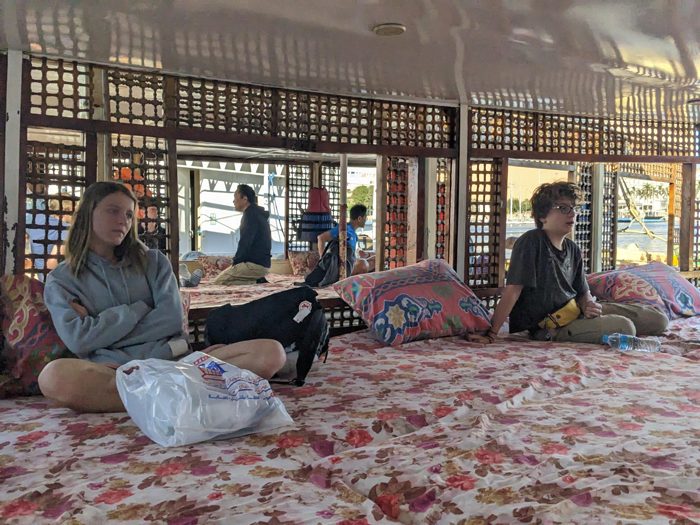
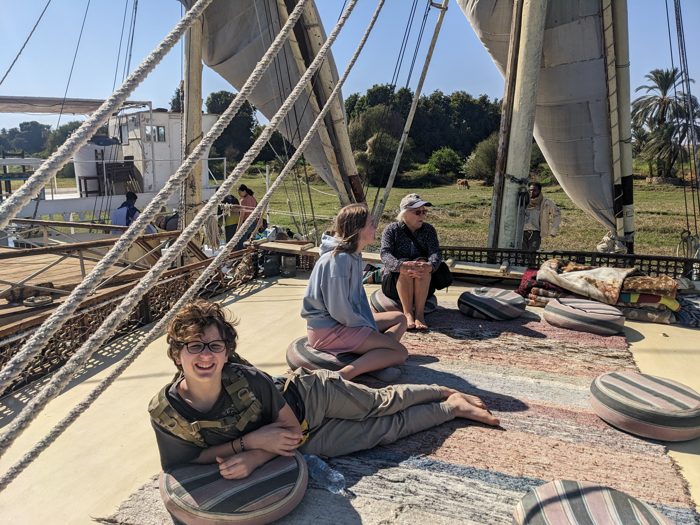
Our captain raised the sail, and we glided gently along the Nile.
For about two hours, we simply sat and watched Aswan drift past from the water. The pace was slow, the breeze was cool, and the river made everything feel calmer.
The Nile is one of those places whose name carries almost too much history. You grow up hearing about it in connection with pharaohs, temples, floods, farming, Moses, pyramids, and ancient civilization. Then suddenly you are sitting on a boat on the actual river, wrapped in a blanket, trying not to fall asleep.
Which I did.
For about an hour.
I would like to say I stayed awake the whole time, thoughtfully absorbing the sights and sounds of the Nile. But the boat was gentle, the morning air was cool, and someone had wisely provided blankets.
That is a dangerous combination.
I pulled one around me, leaned back, and surrendered.
There are worse places to nap than the Nile.
The Singing Boy on the Paddleboard
At one point, a nine-year-old boy paddled up beside our felucca on a paddleboard and began singing songs to us.
He seemed to know bits of popular songs in different languages, clearly choosing whatever might connect with the tourists on board. It was charming, enterprising, and surprisingly effective.
Several people gave him a well-earned tip.
I admired the whole operation.
At nine years old, I was probably trying to avoid chores and wondering what snacks were available. This boy had a floating performance business on the Nile.
Respect.
It was one of those small travel moments that sticks with you: not famous, not scheduled, not marked on an itinerary, but full of life.
Just a boy, a paddleboard, the river, and a playlist designed for international tipping.
Fire, Tea, and a Quiet Shoreline Moment
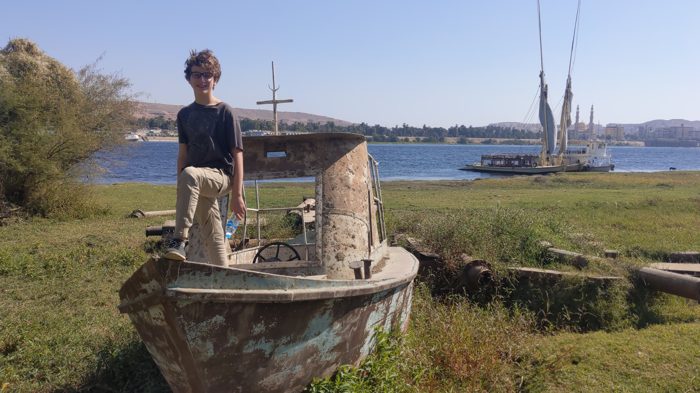
After the felucca ride, we went ashore and wandered around for about half an hour.
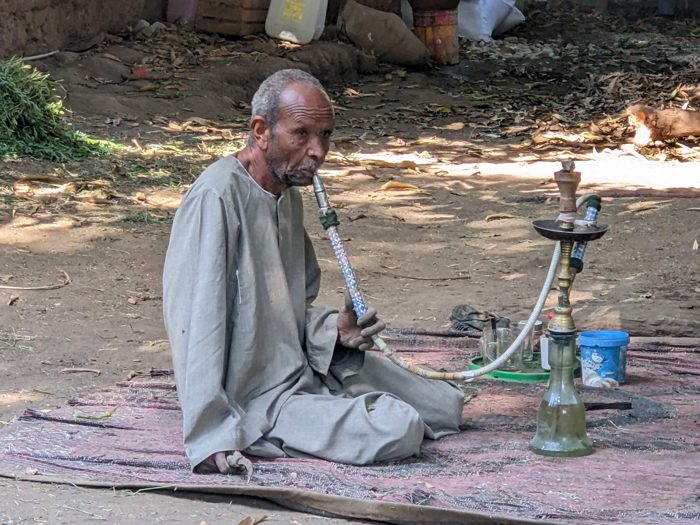
Some members of our group took photos of cows and a donkey in a field. Nearby, we came across a small house where three men were gathered around an outdoor fire, smoking shisha pipes.
They were gracious and welcoming, allowing us to come closer and take photos.
A kettle sat over the fire, blackened from use, boiling water for tea. It was midnight dark from smoke and flame, the kind of kettle that looked like it had earned its place through years of service.
There was something peaceful about that little scene.
No performance.
No sales pitch.
Just men by a fire, tea heating, smoke curling upward, animals nearby, and the Nile not far away.
Travel is often at its best when nothing dramatic happens for a minute.
You simply notice where you are.
Lunch on the River
After our short walk, we said goodbye to the feluccas and boarded a supply boat with a long table set up on the top deck.
Lunch was waiting.
We ate traditional Egyptian food while motoring along the Nile, which felt wonderfully civilized. The boat moved slowly, the river carried us along, and lunch somehow tasted better because we were eating it on the water.
Meals during travel are often tied to location in memory.
You may not remember every dish perfectly years later, but you remember the feeling.
The sound of the motor.
The river air.
The table on deck.
The soft relief of not being on a bus yet.
Eventually, though, the bus returned.
It always does.
Kom Ombo and the Crocodile Mummies
Around noon, we began the drive toward Luxor, a trip of about three to four hours.
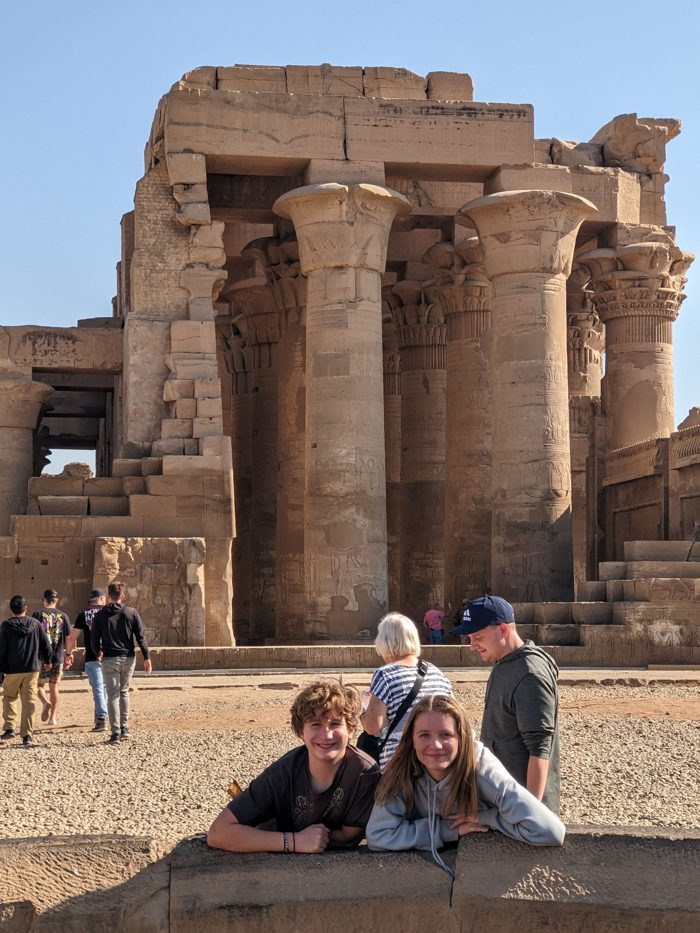
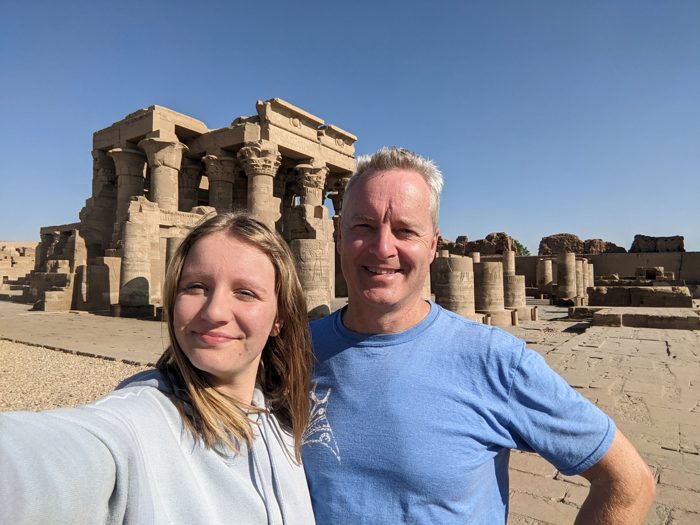
Along the way, we stopped at Kom Ombo, an archaeological site along the Nile.
The temple was interesting, but what made Kom Ombo especially memorable was the small museum known for its mummified crocodiles.
Ancient Egypt does not do boring museums.
The crocodiles were connected to the worship of Sobek, the crocodile god, and seeing them preserved was both fascinating and slightly unsettling.
Mummies are already intense.
Crocodile mummies add teeth.
The temple itself helped break up the drive, which was appreciated. Long bus rides are much easier when interrupted by ancient ruins and preserved reptiles.
This is a sentence I did not expect to write before visiting Egypt.
Arrival in Luxor
We arrived in Luxor around 5 p.m., just as the sun was beginning to set.
Luxor felt exciting right away because it is surrounded by some of Egypt’s most extraordinary ancient sites. Valley of the Kings, Karnak Temple, Luxor Temple — names that sound like they belong in a history book until suddenly they are part of your next two days.
We went directly to a local restaurant two blocks from the hotel for dinner before checking in and settling down for an early night.
After Cairo, Aswan, Abu Simbel, and the Nile, we needed sleep.
Actual sleep.
Not train sleep.
Not alarm-threatened sleep.
Not “we need to be up before sunrise” sleep.
Just sleep.
The day had been a welcome change of pace. A felucca sail. A nap under blankets. A boy singing from a paddleboard. A quiet fire by the river. Lunch on a boat. Crocodile mummies. Arrival in Luxor at sunset.
Egypt had shown us grandeur already, but this day gave us something softer.
A river day.
A movement day.
A day where history did not shout quite so loudly, but still flowed beside us the entire time.
In the next installment, we visit the Valley of the Kings, step inside ancient tombs, decide whether King Tut’s tomb is worth the extra ticket, and get tricked by a horse-drawn carriage into visiting the “Egyptian Market” that was not exactly the market we had in mind.