
May 5, 2026 • Norm
Day 17 — Trick Fountains, Picnic Lunch, and Sliding Into the Berchtesgaden Salt Mines
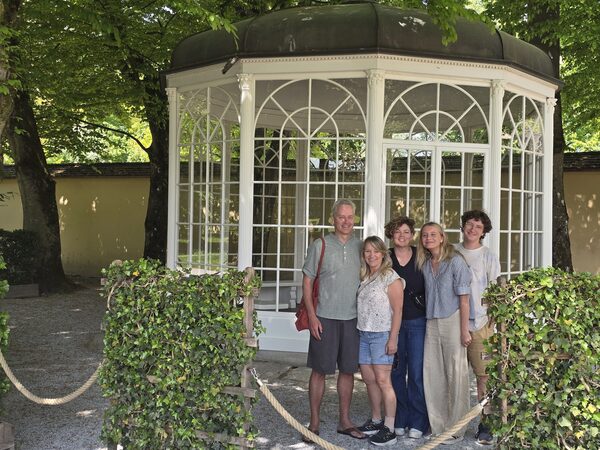
Tuesday, May 5, 2026
After the cliff-climbing, lake-floating, mountain-gazing adventure of the day before, we decided that Tuesday, May 5, 2026, should begin slowly. Not “we’re exhausted and cannot move” slowly, but the more civilized kind of slow where nobody feels guilty for not leaving the house before breakfast is properly finished.
We were still based in the Salzburg area, and we did not even head out until around 11:00 a.m. By this point in the trip, any morning that did not involve a train connection, packed luggage, a foreign parking machine, or someone asking, “Where is Zak?” felt like a luxury holiday all by itself.
Trick Fountains at Hellbrunn
Our first stop was Hellbrunn Palace, famous for its trick fountains. Hellbrunn was built in the early 1600s by Prince-Archbishop Markus Sittikus as a pleasure palace — basically a summer playground for someone who had power, money, and a suspiciously strong interest in spraying his guests with water.
The trick fountains have been entertaining and surprising visitors for centuries, and the amazing thing is that they are still funny. You would think a 400-year-old prank might lose its edge, but hidden water jets never really go out of style. People still gather around, try to guess where the water will come from, and then shriek when it comes from somewhere completely unreasonable.
The kids had a great time watching the fountains suddenly come alive. One minute, everyone was calmly admiring old stonework and garden design. The next minute, water shot out of benches, tables, walkways, grottoes, or some other innocent-looking object that had clearly been waiting for its moment.
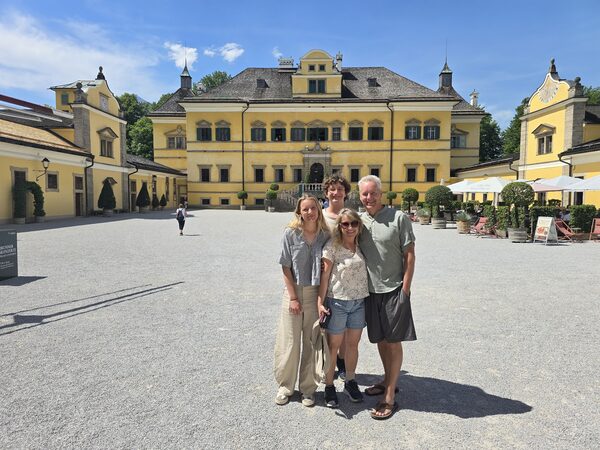
It was also fun watching adults pretend they were not nervous. At Hellbrunn, everyone becomes suspicious of everything. A stone chair? Dangerous. A decorative path? Probably dangerous. A quiet corner? Definitely dangerous. The whole experience makes you walk around like a detective in a waterproof crime scene.
What makes Hellbrunn so memorable is that it feels playful rather than grand. Many European palaces are impressive because they are enormous, gilded, or serious. Hellbrunn is different. It is beautiful, but it also has a grin hidden behind the architecture. It is history with a sense of humor — which, honestly, more history could use.
A Picnic in the Park
After wandering through the fountains and gardens, we had a picnic in the park beside Hellbrunn. It was simple and relaxing, the kind of lunch that feels especially good after days of restaurants, trains, schedules, and sightseeing. There is something about sitting outside near Salzburg, with green space around you and mountains not far away, that makes ordinary food taste better.
It was a good pause in the day: no rush, no reservations, no complicated ordering, and no one charging extra for ketchup.
Into the Berchtesgaden Salt Mine
After lunch, we drove back across the border into Germany for our 4:00 p.m. tour of the Berchtesgaden Salt Mine.
The salt mine was a completely different kind of experience from Hellbrunn. In the morning, we were being sprayed by centuries-old fountains. In the afternoon, we were putting on overalls and heading into a mountain. This is one of the things we loved about traveling in this region: you can go from palace gardens to underground mines in the same day and somehow both feel perfectly normal.
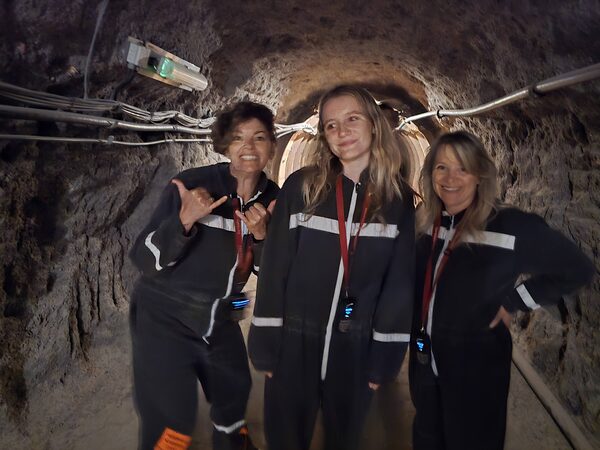
Before the tour, we were given overalls to wear. There is something instantly humbling about a family being handed matching mine clothes. Suddenly, we looked less like tourists and more like an underqualified work crew reporting for our first shift.
The kids loved it immediately.
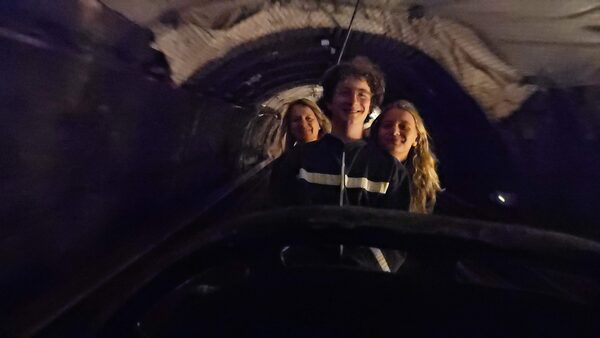
The tour began with a ride on the little mine train, which carried us into the depths of the salt mine. The moment the train moved into the darkness, it felt like the day had shifted into adventure mode. We were leaving the bright alpine world behind and entering the underground world that helped shape the history of this whole region.
Salt was once incredibly valuable. It preserved food, supported trade, created wealth, and helped places like Salzburg and Berchtesgaden grow in importance. Today, salt sits casually on kitchen tables, mostly ignored until someone oversalts the potatoes. But for centuries, it was precious — sometimes called “white gold.” Going underground made that history feel more real. This was not just something from a textbook. It was in the rock around us.
Mine Trains and Underground Slides
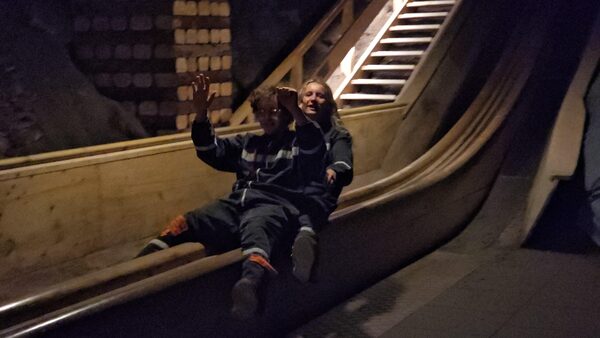
The best parts of the tour, at least according to the younger members of the family, were the slides. Instead of simply walking down into different levels of the mine, we got to slide. Miner’s slides may be one of the best historical education tools ever invented. You learn, but you also get to travel deeper into a mountain at a speed that feels just irresponsible enough to be fun.
The slides turned the tour from “interesting historical site” into “can we do that again?”
We also crossed an underground lake, which was one of the most memorable moments of the tour. The still water, dim lighting, cool air, and echoing underground space made it feel mysterious and almost dreamlike. It was hard to believe that earlier in the day we had been standing in a sunny palace garden, waiting to be attacked by fountains.
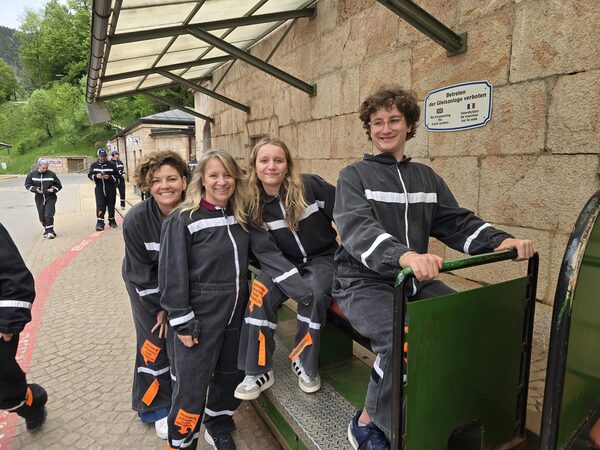
By the time we emerged from the mine, we had learned about salt mining, ridden a train into a mountain, slid through underground passages, crossed a dark lake, and worn overalls with more confidence than we deserved.
After the tour, we headed back home and called it a day. There were no missed train connections, no ankle-destroying cobblestones, no cliff walls, and no frantic parking garage drama. Just trick fountains, a picnic, salt mine slides, and a quiet evening.
It was exactly the kind of day we needed: playful in the morning, peaceful at lunch, adventurous underground in the afternoon, and simple by evening. Salzburg had once again given us history with personality — first by spraying people with 400-year-old fountains, then by sending us into a mountain dressed like miners.