
April 8, 2007 • Norm
Aranui 3 Day 2: Easter Sunday, Tahitian Time, and a Four-Year-Old Betrayal
Day 2 · Fakarava, Tuamotu Islands · 8 April 2007
The first thing we learned in Fakarava was that being carried by a stranger down the side of a cargo ship is not every four-year-old’s idea of adventure.
Honestly, fair point.
We arrived at Fakarava around 6:30 in the morning, entering the Tuamotu Islands’ second-largest atoll through an enormous one-mile-wide pass. On one side was a thin strip of land stretching for over 40 kilometres. On the other were broken patches of rock and vegetation forming the edge of the lagoon.
The open sea had finally calmed, which was a gift to everyone’s stomach.
It was Easter Sunday, so we planned to attend church during our short stop.
The Barge of Childhood Alarm
The Aranui anchored about 800 feet offshore, which meant going ashore by metal barge. One of the ship’s cranes lifted the bulky boat into the water like it was moving a bathtub for giants.
Then came the stairs.
Before we fully understood what was happening, crew members gently picked up our four- and six-year-olds and carried them down the steep curved steps to the barge.
Our four-year-old realized halfway down that he was not in Mom or Dad’s arms.
His face said: betrayal.
He cried like we had abandoned him to a pirate apprenticeship.
We had not. We were right behind him. This information did not help.
Church on Tahitian Time
We landed dry-footed thanks to a ramp lowered from the barge, while Tahitian drums welcomed the rest of the passengers. But we were headed to church.
The small Latter-day Saint chapel was only a minute away. We arrived shortly after 8:00 and found just a handful of people. When I asked what time church started, I was told, “Between 8:00 and 8:30.”
Tahitian Time.
By 8:30, about 22 people had gathered in the small chapel. Our five children sat in white shirts, khaki pants, and sandals on white plastic chairs.
The service was simple and familiar, though not always understandable. The first hymn was in Tahitian and French. The rest were French. The final sermon was mostly Tahitian, with the occasional French sentence floating by like a rescue boat I could not quite reach.
My son kept asking me to translate.
I could not.
It was a good reminder of what our children had been experiencing for weeks: words all around them, meaning just out of reach.
Across the Atoll
After church, we visited the Catholic church down the road, just as the closing hymn poured out in beautiful harmony. People dressed in white emerged, women in hats, bicycles along the wall, pickup trucks waiting.
My oldest son and I then walked inland to see how wide the atoll was.
It took three or four minutes.
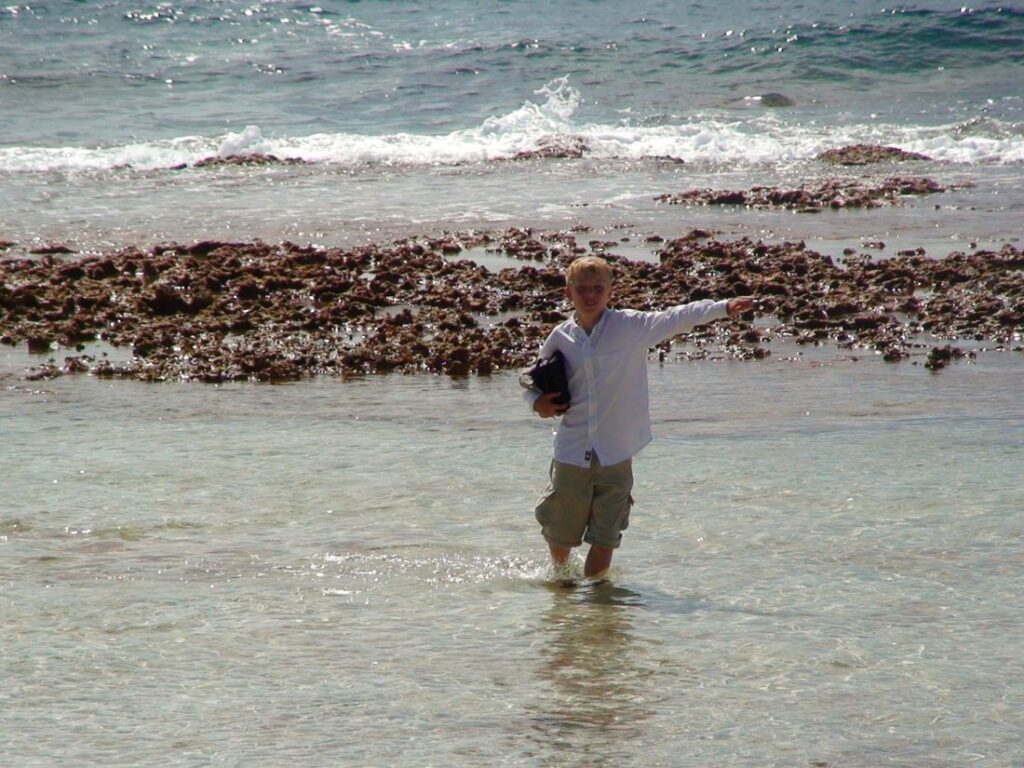
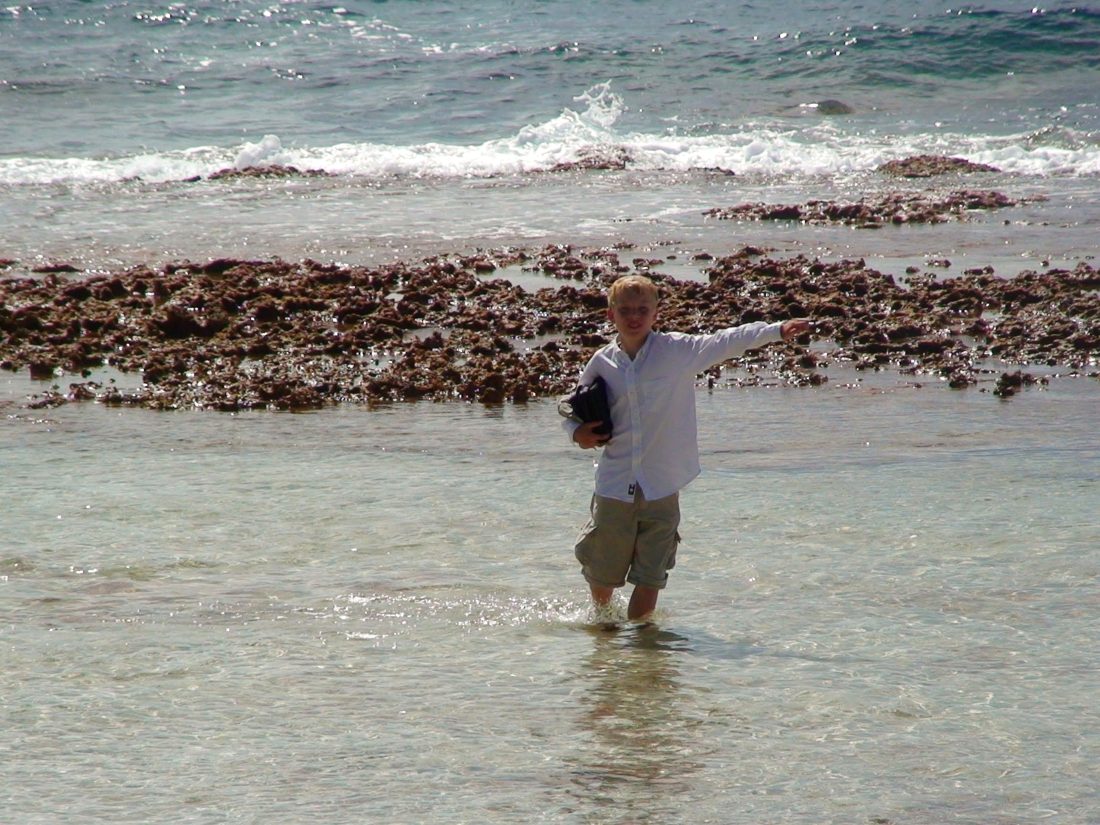
On the ocean side, waves crashed against coral and rock, a sharp contrast to the calm lagoon. He wanted to wade out. I called him back quickly. Coral, waves, and parental anxiety are a powerful combination.
Music, Boules, and Perfect Timing
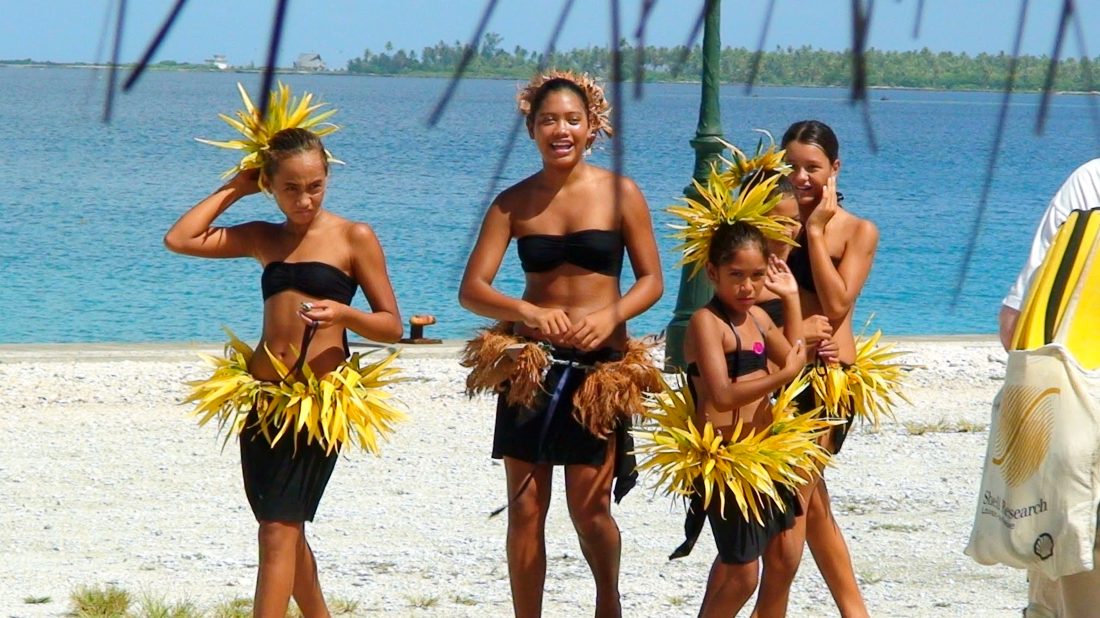
Back near the quay, young Tahitian dancers had finished performing, while musicians continued with guitars and strings. Their harmonies carried through the hot air.
While waiting for the barge, we watched three local men play pétanque on rough gravel, cigarettes in hand, metal balls sailing toward the cochon. A proper French player might have fainted at the court conditions. These men seemed perfectly happy.
As we returned to the Aranui, the heat had fully arrived. We stepped back into the ship’s air conditioning with deep gratitude.
Then, as the Aranui lifted anchor and left Fakarava, the rain finally came.
We had been given a dry Easter morning, a small chapel, music, coral, and just enough sun to make us appreciate shade.
Perfect timing.