
April 17, 2007 • Norm
Aranui 3 Day 11: The Pig Dance, the Giant Tree, and the Beach That Fought Back
Day 11 · Nuku Hiva: Hatiheu · 17 April 2007
There are beaches that invite you in gently.
And then there are beaches that say, “Let’s see what you’ve got.”
Hatiheu belonged to the second group.
We returned to Nuku Hiva, this time to the north coast village of Hatiheu. It was the first town we visited that still had dirt roads through the village, making it feel like time had slowed down a little.
Our four-year-old Eli asked to stay onboard with Mila, the children’s activity leader. After so many hot shore days, he wanted routine, shade, and predictable fun.
Given the mosquitoes and nonos on Nuku Hiva, we agreed.
Copra Before Culture
Kirsten, Alyssa, Jaeden, Dailin, Orin, and I went ashore and joined the pickup truck shuttles.
Near the archaeological site, we watched two men making copra. One collected coconuts. The other sat beside a pile and, with one swipe of his machete, husked each coconut in seconds.
He threw empty shells into a fire about twenty feet away with remarkable accuracy.
They made it look easy.
This is how you know work is difficult.
The Pig Dance
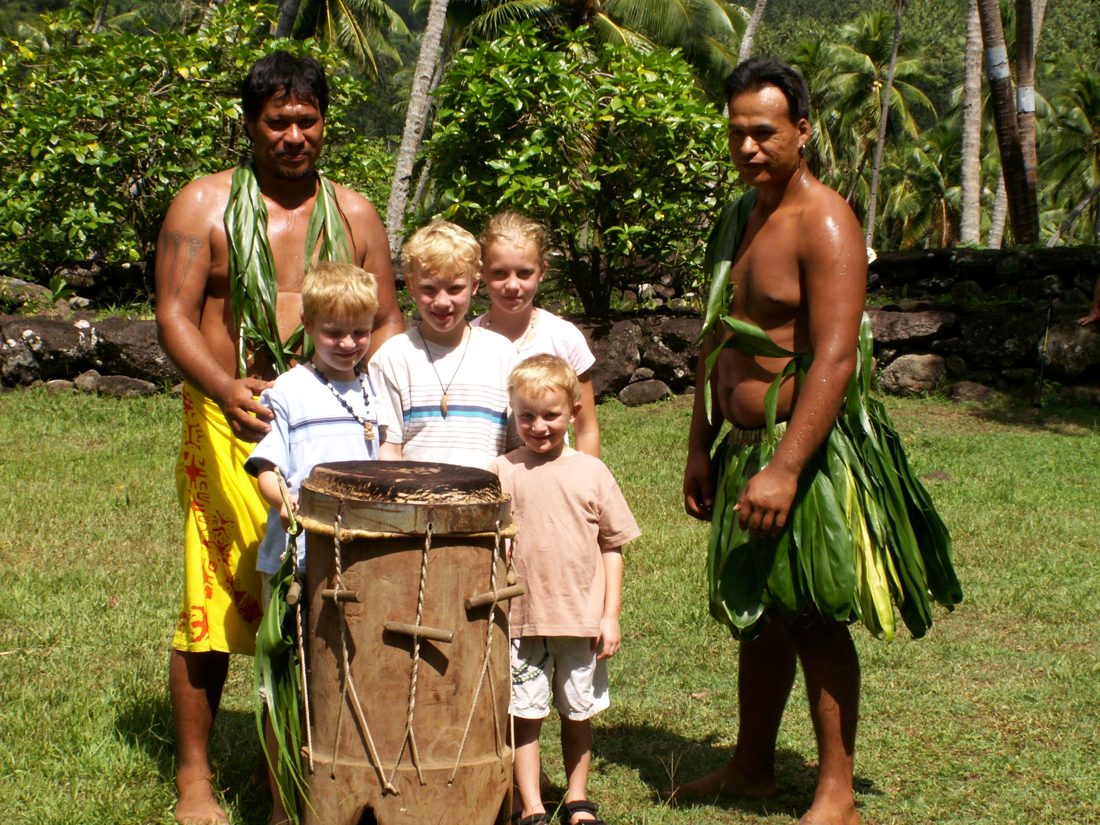
At the Hikokua tohua, we waited for the full group to arrive. Then three local men performed the pig dance, imitating the island’s respected pigs with hunched movements and deep hoarse sounds.
The children loved it.
I was told that after singing like that for twenty minutes, your voice is gone for the day.
This seems believable.
The performance took place where dances had been held in earlier times, with stone platforms on three sides and spiked mountains visible beyond.
It was history, humour, and theatre all at once.
The Tree That Owned the Mountain
We continued up to the Kamuihei and Tahakia sites, restored in 1998 under archaeologist Pierre Ottino, whom we had met earlier on Ua Pou.
These sites felt more shaded and authentic, with trees still present. The most astonishing feature was a massive 600-year-old pandanus tree, with a huge multi-rooted trunk and a canopy stretching over the area.
I had never seen anything like it.
Some places are impressive because of what people built.
This one was impressive because a tree had clearly decided to become a cathedral.
Chez Yvonne and the Serious Lunch
Lunch was at Chez Yvonne, run by the town spokeswoman or mayor, a respected local woman who worked to preserve Hatiheu’s culture and history.
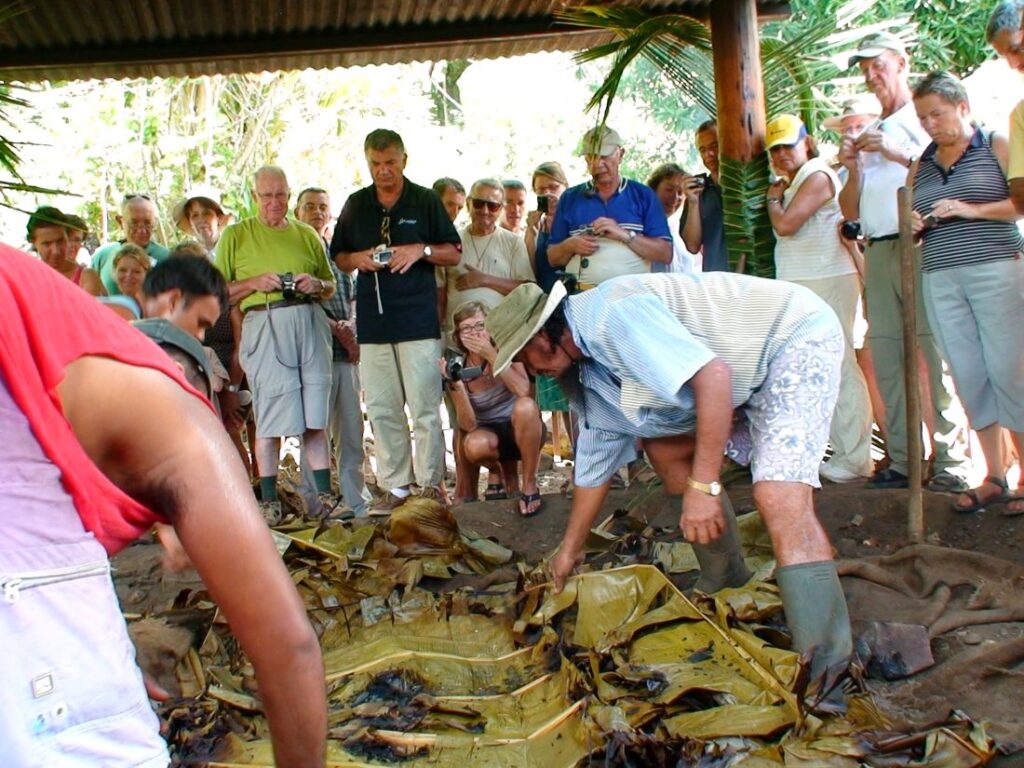
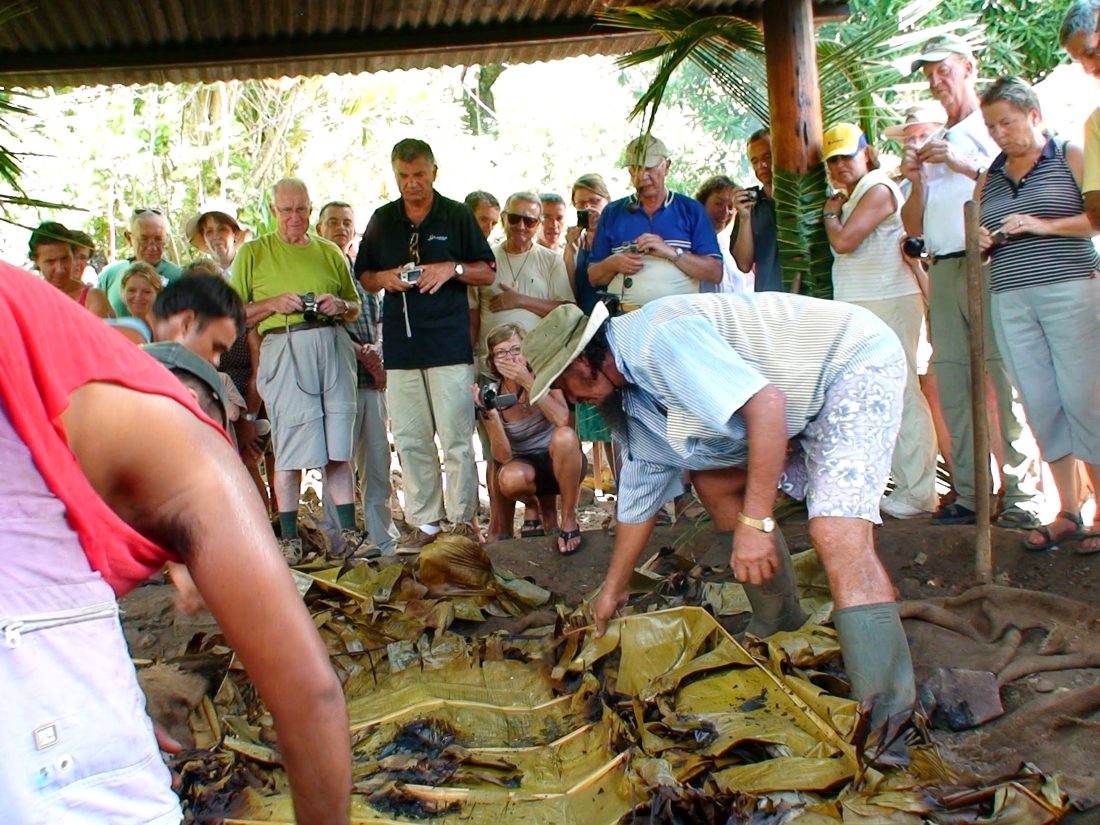
The meal began with the unveiling of three pigs and breadfruit cooked since 3:00 AM in an underground oven.
Then came a four-course feast: seafood, lobster, pig, and tapioca coconut dessert.
By the end, movement was optional.
The Beach That Would Not Let Go
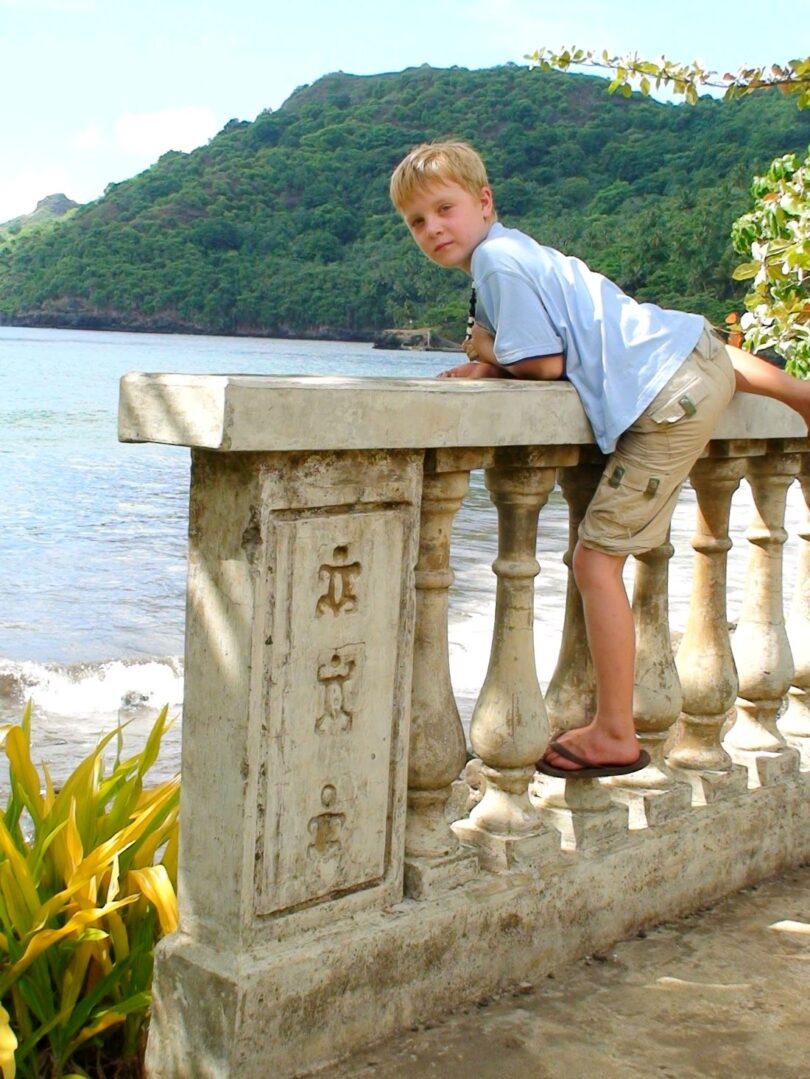
We skipped the 40-minute hike to the Anaho saddle viewpoint and chose the black sand beach instead.
The waves were thrilling and slightly alarming. Small waves broke near shore, then larger three- to five-foot crushers rolled in. Alyssa, Jaeden, and Dailin loved being pounded by them farther out. Orin played closer to shore with a French girl from the boat while I lifted them over the waves and kept them from being swept away.
The Marquesas are not famous for calm reef-protected beaches. These islands face the Pacific directly.
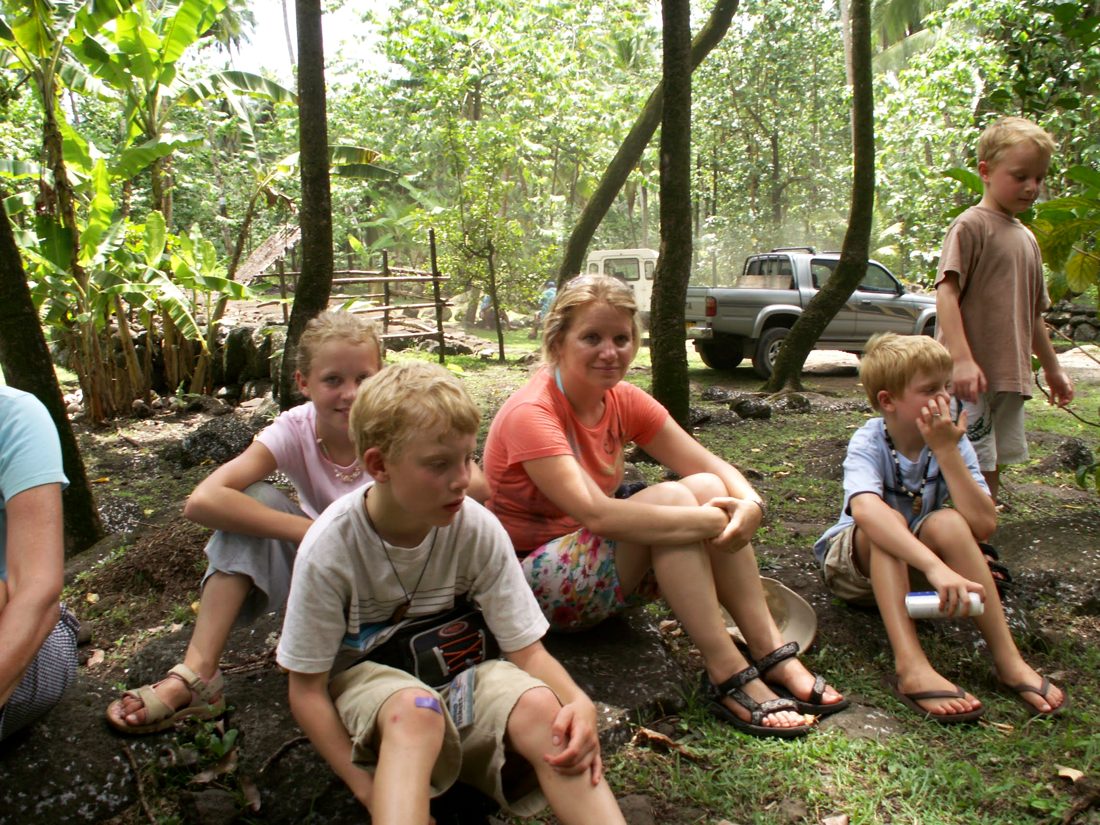
The children thought this was excellent.
The parents had more complicated feelings.
Eventually, we lured them out with the promise of the Aranui pool.
Less dangerous.
Still wet.
Everyone accepted.