
March 9, 2016 • Norm
Aranui 5 Day 12: The Day I Accidentally Became the Entertainment
Day 12 · Rangiroa, Tuamotu Islands · 9 March 2016
I woke up convinced we were entering Rangiroa at six o’clock.
The only problem?
We weren’t.
Somewhere between an orientation meeting and my increasingly unreliable vacation brain, I had managed to remember the wrong time.
Still, by 5:45 a.m., Kirsten was already standing on our balcony watching the horizon, and I wasn’t about to miss one of the most beautiful atolls in the world because of a scheduling mistake.
After all, I’d already missed breakfast before breakfast started earlier on this trip. I wasn’t about to add “slept through Rangiroa” to the list.
Hunting Dolphins at Sunrise
Rangiroa is the second-largest atoll in the world, and entering through Tiputa Pass is one of the highlights of any voyage through French Polynesia.
The pass is famous for dolphins.
On a good morning, they surf the currents, leap through the waves, and generally put on a show for arriving boats.
Naturally, the entire top deck was packed with passengers looking for them.
The weather, unfortunately, had other plans.
Low clouds covered the sky, and the water was dark and difficult to see into.
Everyone stared into the ocean.
Nothing.
More staring.
Still nothing.
Then, just after we entered the lagoon, Kirsten spotted a single dolphin surfacing briefly before disappearing back toward the pass.
One dolphin.
Not exactly SeaWorld.
But enough to keep everyone happy.
Garbage Bags and Tropical Planning
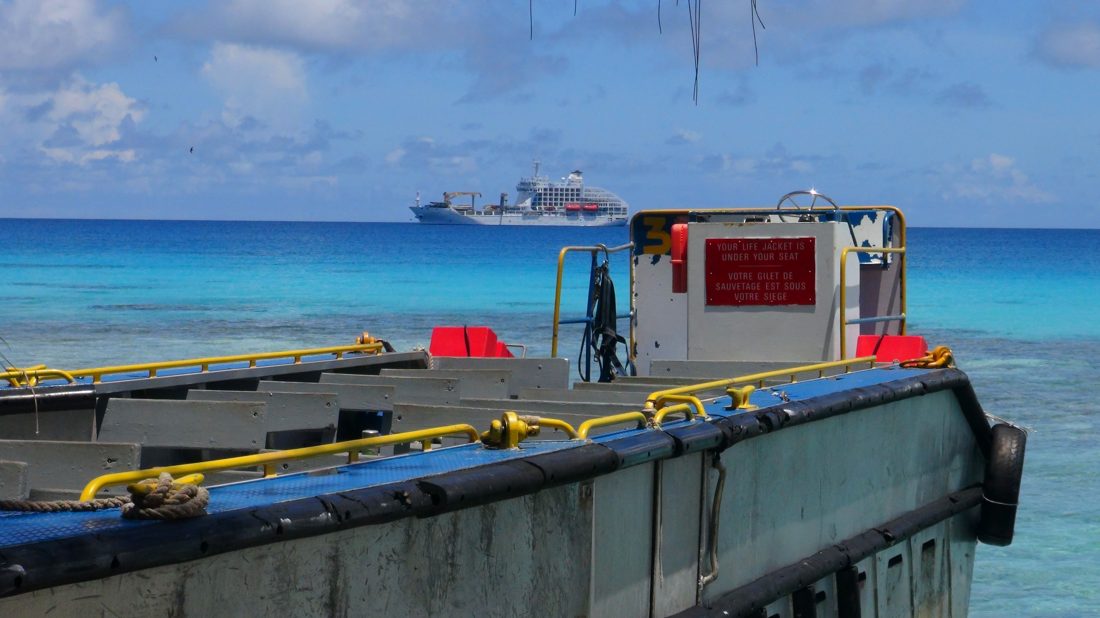
As the ship anchored offshore, we headed toward breakfast before catching one of the first tenders ashore.
That’s when we noticed something.
Rain.
Not normal rain.
The kind of rain that appears instantly and makes everyone scramble for cover.
Passengers rushed for rain jackets.
Others hid under overhangs.
I looked at my camera bag and realized I was completely unprepared.
My solution?
Garbage bags.
A quick request to one of the housekeeping staff and I soon looked like a man preparing for either a tropical storm or a very unusual crime scene.
Fortunately, the storm disappeared almost as quickly as it arrived.
By the time we boarded the second tender, the sun was breaking through the clouds.
And suddenly Rangiroa transformed.
Fifty Shades of Blue
I’ve visited some beautiful places.
I’ve seen Caribbean beaches.
Hawaiian coastlines.
Remote islands across the Pacific.
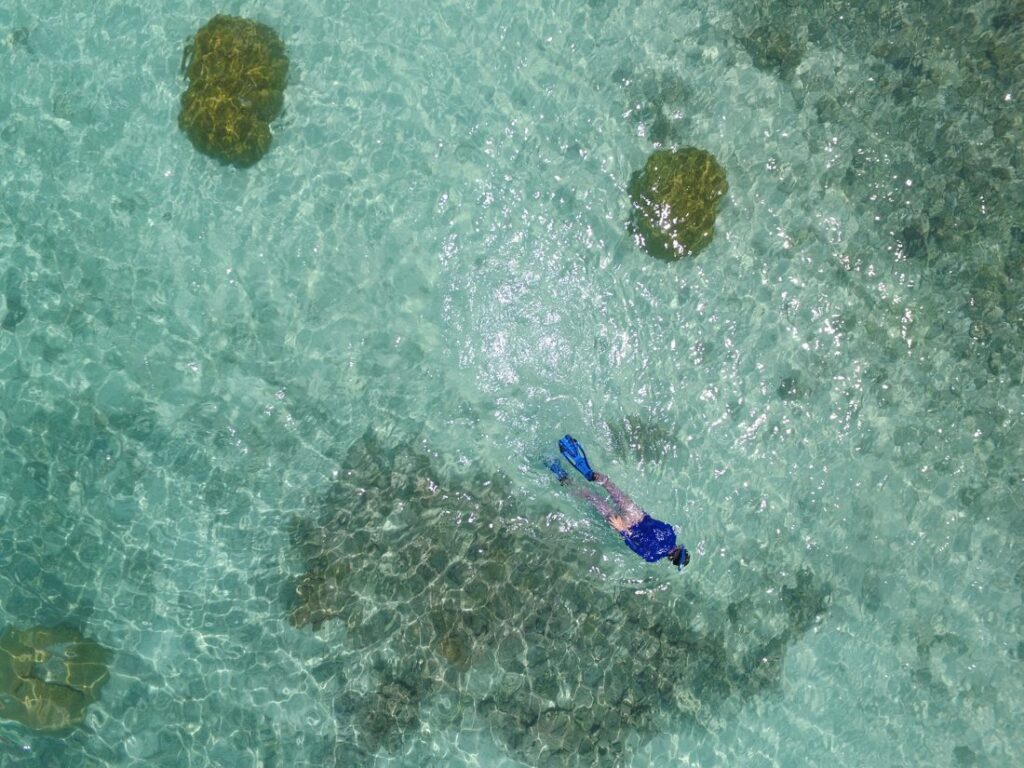
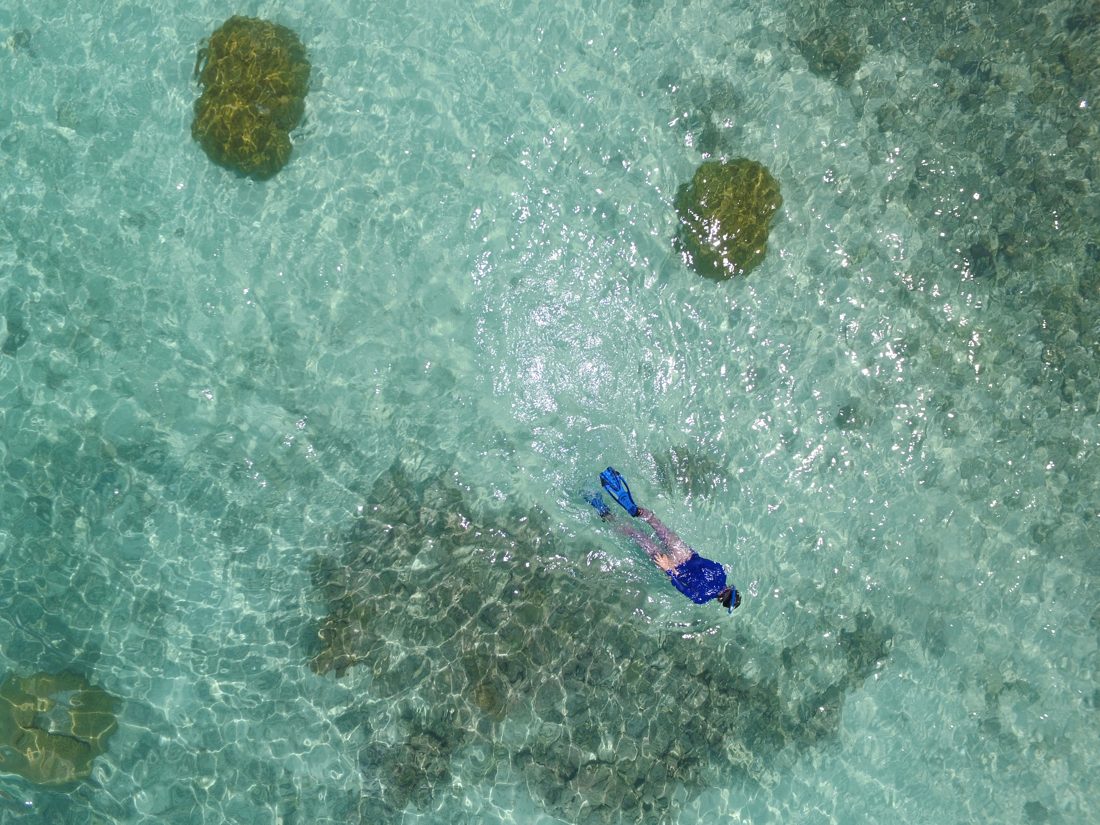
But Rangiroa’s lagoon still ranks among the most spectacular stretches of water I’ve ever seen.
As the sunlight spread across the lagoon, colours exploded everywhere.
Turquoise.
Aquamarine.
Deep blue.
Light blue.
Blue-green.
Colours that don’t even seem to exist in normal life.
The water looked almost unreal.
The kind of scenery that makes photographers look like geniuses regardless of their actual talent.
The Pearl Factory
One of the popular activities was a visit to a nearby pearl farm.
A shuttle carried passengers through the coconut groves to learn how Tahitian black pearls are produced.
The process was far more complicated than I expected.
Years of care.
Years of waiting.
Years of hoping that the oyster cooperates.
It turns out growing pearls requires considerably more patience than I possess.
Watching workers carefully harvest and prepare oysters gave me a new appreciation for what appears in jewellery stores.
Those little black pearls represent years of work.
Not just a pretty souvenir.
Freight, Fire Trucks, and Horses
Back aboard the ship after lunch, one of the longtime Aranui guides, Tino, hosted a question-and-answer session.
This turned out to be one of the most fascinating presentations of the trip.
Passengers asked about everything.
What cargo had been transported?
What was the strangest item ever loaded aboard?
How dangerous was the freight operation?
Over the years, the Aranui had carried cars, fire trucks, construction equipment, horses, and countless other items across French Polynesia.
Listening to those stories reinforced something I’d been noticing throughout the voyage.
This wasn’t really a cruise ship.
It was a lifeline.
The passengers simply got to come along for the ride.
Suddenly, I’m on the Schedule
Earlier in the trip, several passengers had asked about the drone footage I’d been capturing throughout the Marquesas.
One conversation led to another.
The next thing I knew, I was listed in the ship’s daily program.
Apparently, I had become part of the entertainment.
At 4:30 p.m., I walked into the lounge expecting a modest crowd.
Instead, nearly every seat was filled.
English speakers.
French speakers.
German speakers.
Passengers I’d never met.
All waiting to see drone footage from the islands we’d visited together.
No pressure.
For fifteen minutes, I explained the drone and how it worked.
Then I showed roughly thirty minutes of footage from the Marquesas and Rangiroa.
Mountain ridges.
Remote villages.
Bays.
Waterfalls.
Harbours.
Places many passengers had visited only from ground level.
The response completely surprised me.
Afterward, dozens of people asked how they could get copies once the videos were edited.
Apparently I hadn’t put everyone to sleep.
Always a nice outcome when you’re speaking to a room full of people.
The Magic of Rangiroa
That evening the Aranui band performed while passengers gathered in the Veranda Bar.
The atmosphere felt different now.
The trip was winding down.
People were exchanging email addresses.
Talking about future travels.
Sharing favourite memories.
Yet when I think back to Rangiroa, one image comes to mind first.
Not the pearl farm.
Not the presentation.
Not even the dolphins.
It’s the lagoon.
Those impossible colours.
Those endless shades of blue.
The sort of beauty that photographs never quite capture.
And the sort of place that reminds you why you travel in the first place.
In the next installment: Bora Bora delivers one last spectacular day, including a helicopter flight through clouds, a private island picnic, and a tropical traffic hazard unlike anything I’ve ever encountered.