
March 6, 2016 • Norm
Aranui 5 Day 9: The Captain’s Ballet in a Harbour Too Small for the Ship
Day 9 · Ua Huka, Marquesas Islands · 6 March 2016
There are certain jobs in the world that deserve more appreciation.
Air traffic controllers.
Heart surgeons.
Anyone who installs fitted sheets.
And after what I witnessed that morning, captains of cargo ships navigating impossibly small harbours.
Because the Aranui wasn’t simply arriving in Ua Huka.
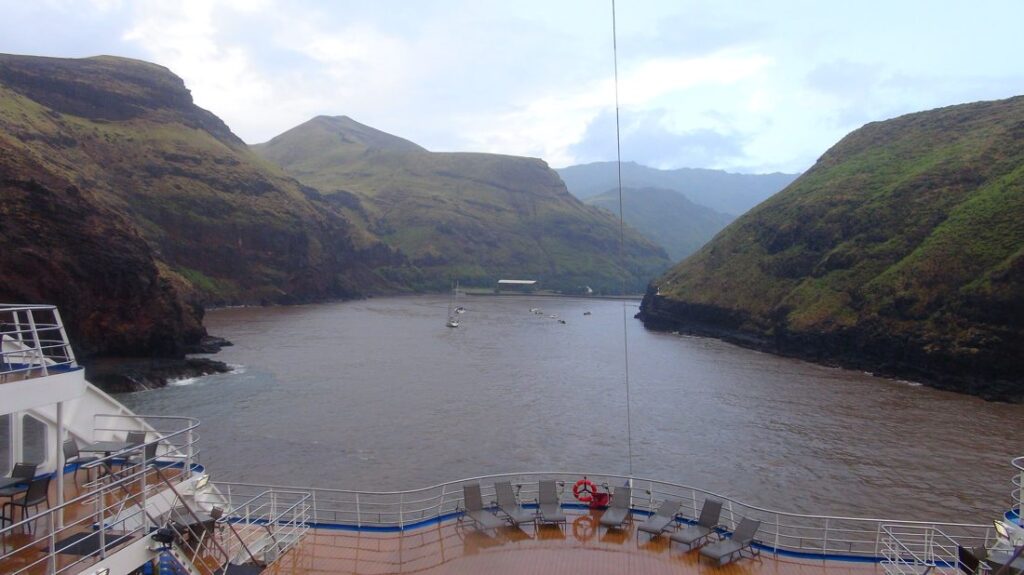
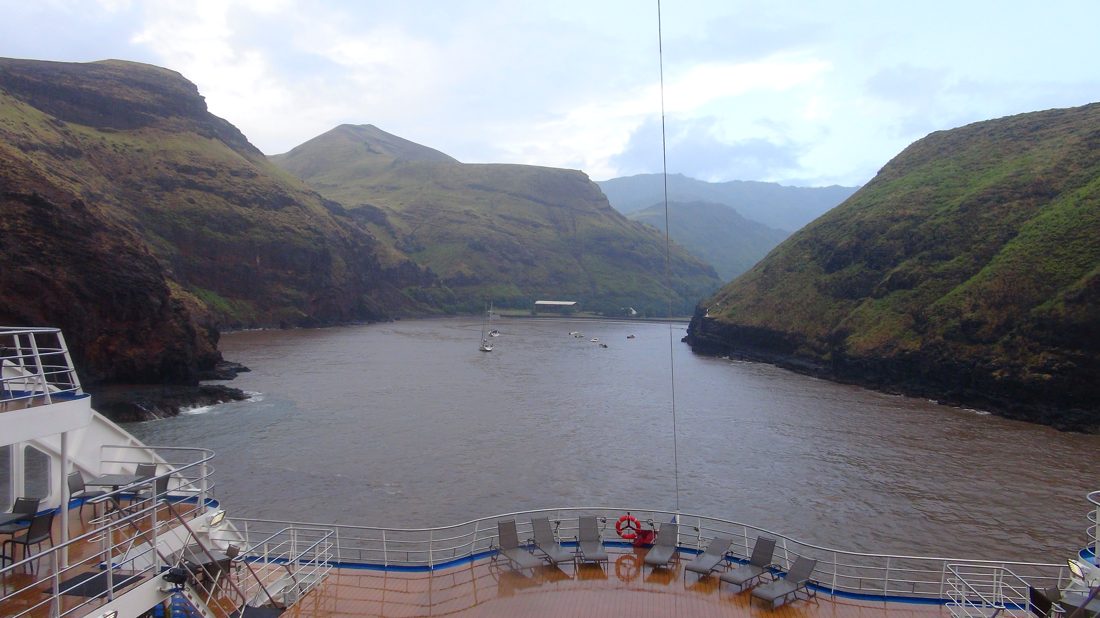
It was attempting to park a ship in a bay that looked about two sizes too small.
The Harbour That Looked Impossible
My alarm rang at 5:50 a.m.
This was not because I enjoy waking up before sunrise.
It was because I had been told that entering Vaipaee Bay was one of the most impressive manoeuvres on the entire voyage.
By six o’clock, I was standing near the bridge watching the cliffs slowly close in around us.
The opening looked narrow.
Very narrow.
The kind of narrow that makes passengers quietly wonder whether someone measured correctly.
The Aranui entered the bay, dropped anchor, and then began turning around.
Not gradually.
Not cautiously.
Precisely.
The ship rotated until it faced back toward open ocean while crew members secured ropes to anchor points ashore.
From where I stood, the rock walls appeared close enough to touch.
The captain, meanwhile, looked completely relaxed.
I was stressed enough for both of us.
The entire operation felt less like navigation and more like a carefully choreographed ballet.
A very expensive ballet involving several thousand tons of ship.
Dancing Was Not Part of My Plan
After breakfast, we headed ashore.
The rain from the previous night had transformed parts of the island into a muddy obstacle course, but fortunately we’d been warned to wear water shoes.
One of the first stops was the small museum in Vaipaee.
Inside were recreations of ancient Marquesan carvings, photographs of early settlers, and displays preserving a culture that nearly disappeared during difficult periods of history.
The museum itself was fascinating.
What happened afterward was considerably less dignified.
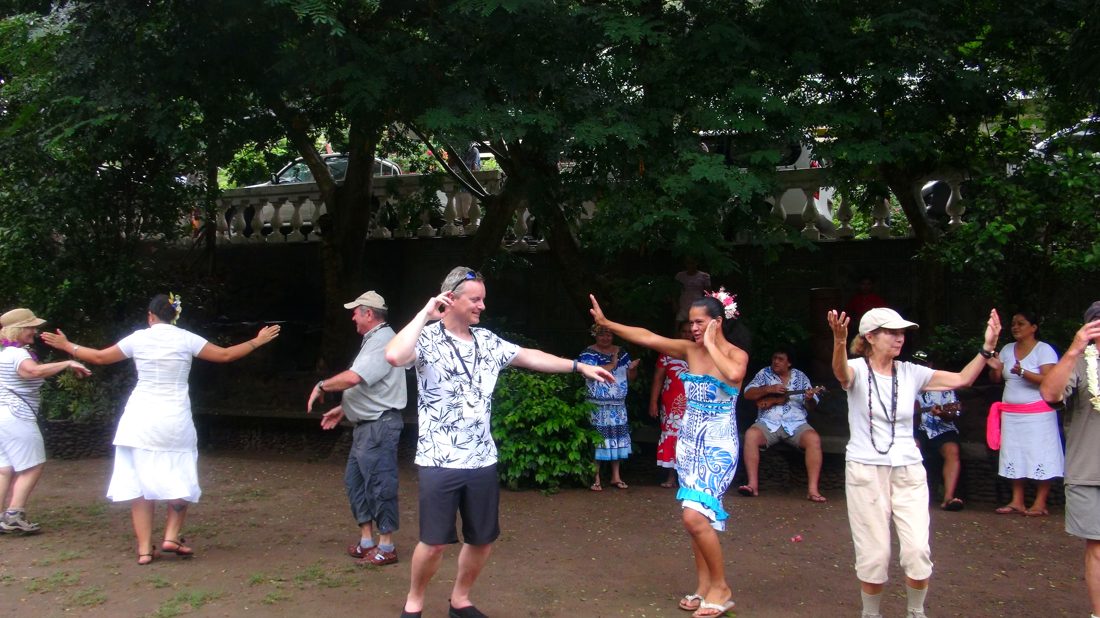
Local musicians began playing.
Women started dancing.
Passengers smiled and clapped.
Then they started inviting volunteers.
Unfortunately, I was seated in the front row.
Even more unfortunately, Kirsten found this hilarious.
One enthusiastic push later, I was participating in a Marquesan dance.
I would love to tell you I performed with grace.
The evidence would likely suggest otherwise.
Still, I managed to bend my knees, wave my arms, and follow along without causing an international incident.
I considered that a success.
The Garden With a Lesson
Next came the botanical gardens.
The trails were muddy enough to test the traction of my water shoes, but the gardens themselves were beautiful.
Mandarins.
Litchis.
Limes.
Passion fruit.
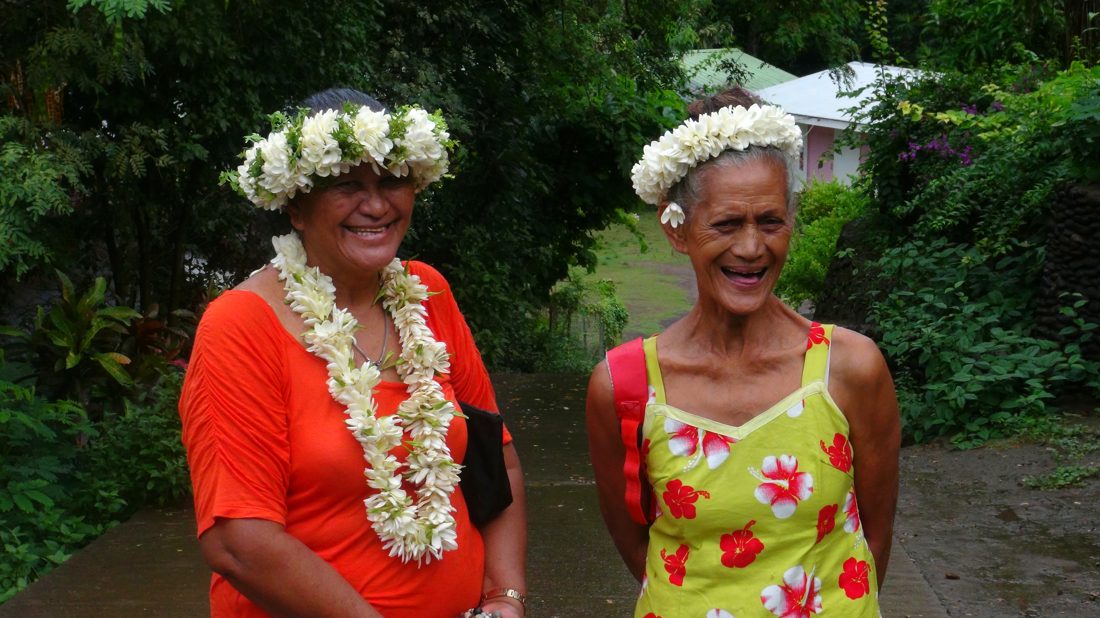
Flowers everywhere.
While wandering through the grounds, we met one of the men responsible for establishing the gardens decades earlier.
He shared a quote that stayed with me.
“You can live off the food on your land, but you cannot eat your money.”
That seemed like a remarkably sensible philosophy.
Particularly in a place where life still feels connected to the land.
The Fish Head Incident
Later we stopped in Hokatu, a tiny village by the sea.
Kirsten and I found a stone bench overlooking the water.
The waves rolled up the shore, pulling smooth rocks back toward the ocean with a soothing rhythmic sound.
It felt peaceful.
For approximately thirty seconds.
Then Kirsten looked down.
A large fish head was lying nearby, perfectly camouflaged among the rocks.
The smell quickly confirmed its identity.
Our scenic bench suddenly became less appealing.
We relocated.
Promptly.
When Rain Becomes a Spectator Sport
By lunchtime, the weather had fully committed itself to being tropical.
Rain pounded the tin roof of our restaurant so loudly that conversation became a team activity.
After lunch, things escalated.
Kirsten and I found shelter near the harbour alongside a local woman and her children.
Rain cascaded down nearby cliffs like temporary waterfalls.
The children treated the storm as the greatest playground imaginable.
They ran through puddles.
Stood under drainage spouts.
Got absolutely soaked.
Then did it again.
Meanwhile, the adults remained under cover wondering if Noah had filed a permit for this.
The Real Show
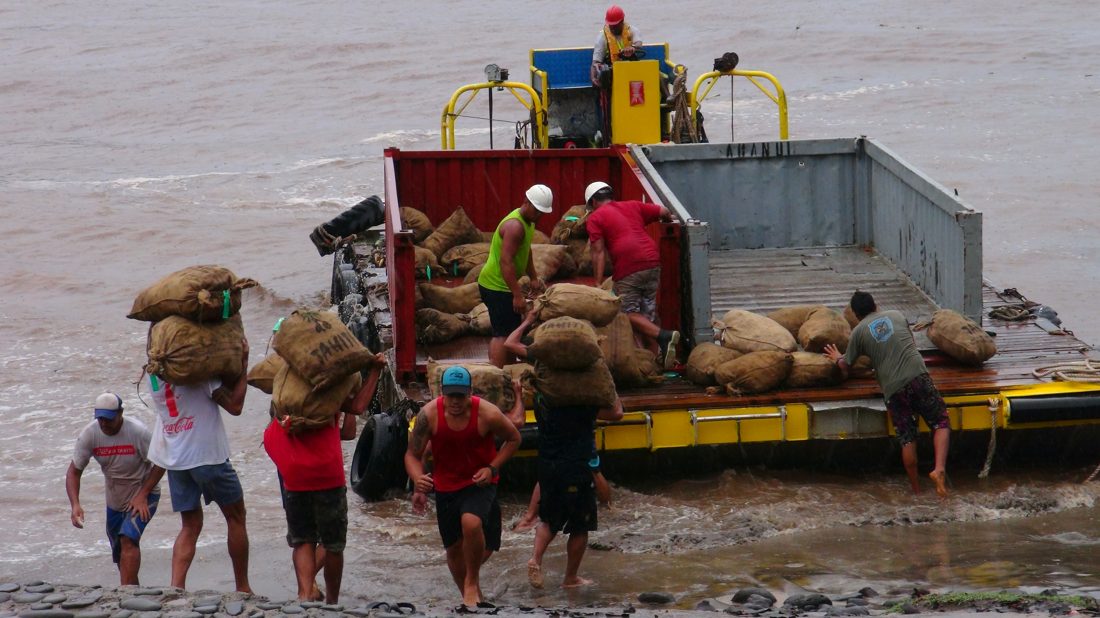
Eventually the Aranui arrived to load cargo.
Most passengers focused on staying dry.
I became fascinated by the copra operation.
Truck after truck arrived carrying sacks of dried coconut.
Men waded into the surf carrying two and sometimes three sacks at a time.
The bags were loaded onto barges and carefully covered before the rain could soak them.
Nobody complained.
Nobody slowed down.
Everyone simply worked together.
Neighbours helping neighbours.
Friends helping friends.
Watching that process taught me more about island life than any museum ever could.
Polynesian Night
Back aboard the ship, we warmed up, dried off, and prepared for one final surprise.
Polynesian Evening.
The outdoor celebration moved indoors because of the rain, but that hardly mattered.
The buffet seemed endless.
Curries.
Seafood.
Roasted pork.
Local specialties.
More desserts than any reasonable person should face without supervision.
Then came the music.
The dancing.
The drumming.
The energy.
By the end of the evening, the entire room seemed happier than when it started.
Which is saying something after spending the day getting soaked.
Why Ua Huka Stayed With Me
Most people remember the scenery.
The dramatic bays.
The horses.
The mountains.
I remember the people.
The musicians.
The gardeners.
The labourers carrying sacks through the rain.
The children laughing in puddles.
Ua Huka felt less like a destination and more like a glimpse into a way of life.
And that made it unforgettable.
In the next installment: Our final day in the Marquesas involves a confused shuttle driver, overloaded island internet, and the joy of finally hearing the voices of our kids back home.