
May 4, 2026 • Norm
Day 16 — Berchtesgaden, Via Ferrata Cliffs, Königssee Waters, and the Eagle’s Nest Above the Mountains
Monday, May 4, 2026
On Monday, May 4, 2026, we had a relaxing morning in Salzburg. After the train adventure the day before, nobody needed an aggressive start. Around noon, we picked up a rental car from the airport and ran into one of those practical travel details worth remembering: Canadians need an International Driving Permit to rent or drive in Austria. The permit translates your license information into other languages and is required in Austria for non-EU/EEA drivers. Italy has similar requirements, and a few other European countries can as well, so this is something worth checking before traveling.
Driving Into Berchtesgaden
Once the rental car situation was sorted out, we decided to drive into Berchtesgaden, a beautiful region of southeastern Germany right near the Austrian border. It is a place of mountains, lakes, alpine villages, and outdoor adventure — a national park landscape that feels clean, dramatic, and almost impossibly peaceful.
Berchtesgaden has long attracted visitors because of its scenery. The mountains rise sharply, the lakes are clear, and the villages have that Bavarian look of steep roofs, flower boxes, painted buildings, and tidy streets. It feels like the kind of place where every direction offers a postcard view.
Our plan split into two groups. Kirsten’s ankle was not going to allow her to climb cliffs, so she and Cheryl chose a gentler and probably wiser afternoon on the lake. Normand, Daniel, Teyauna, and Zakary headed up the mountain for a via ferrata.
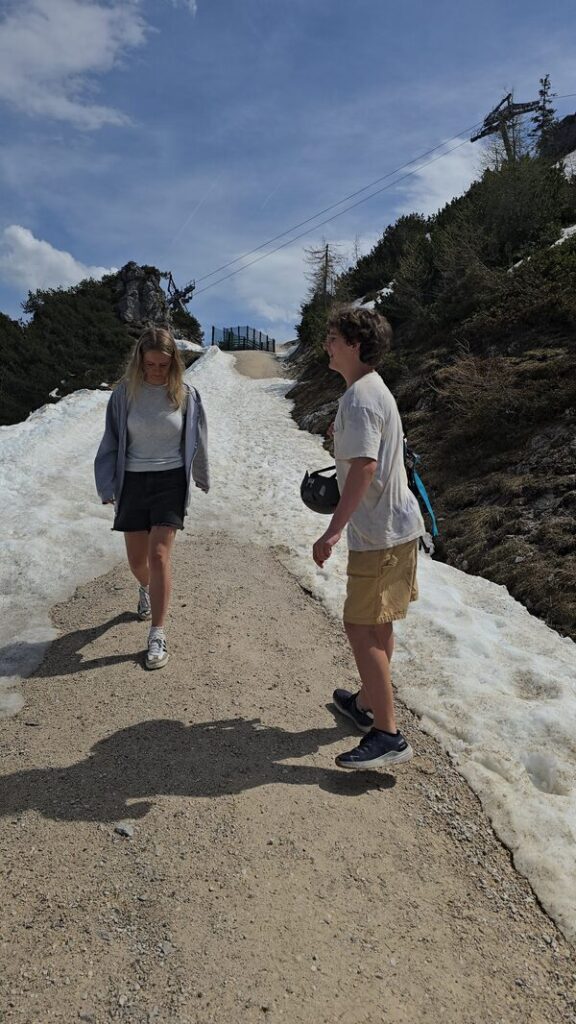
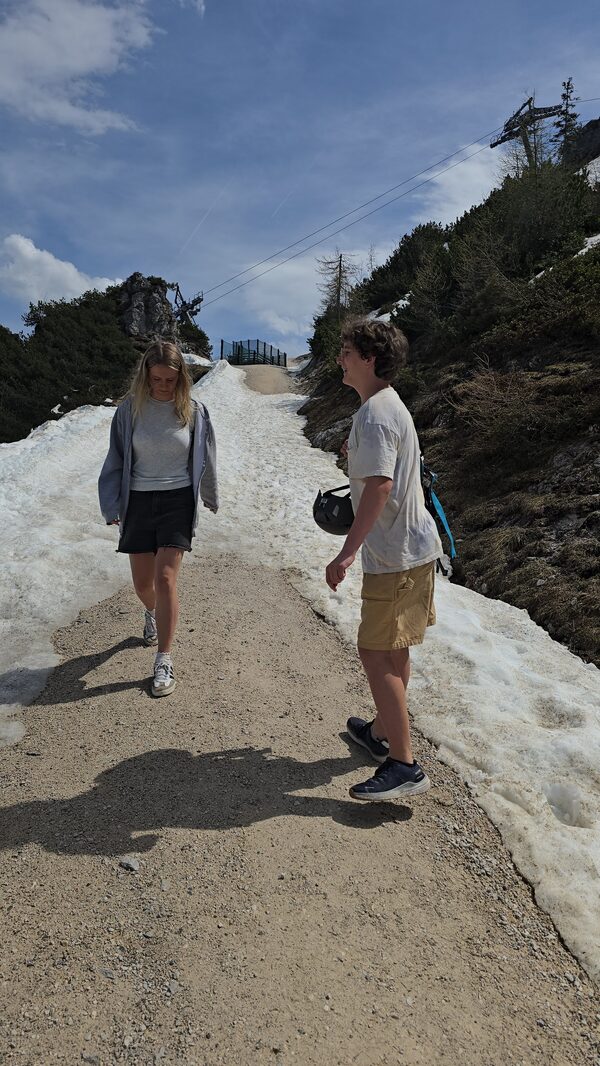
We went to the Jenner area above Königssee, which operates as a ski area in winter and an outdoor sports mountain in summer. To reach the upper area, we took the Jennerbahn gondola up the mountain. As we rose higher, the views opened around us: dark forests below, sharp ridgelines nearby, and the green-blue waters of Königssee far beneath us.
At the top, there were people preparing for different kinds of adventure. Some were hiking. Some were climbing. Some were paragliding off the mountain, which looked both incredible and like something your mother should not have to watch too closely.
Scaling the Via Ferrata
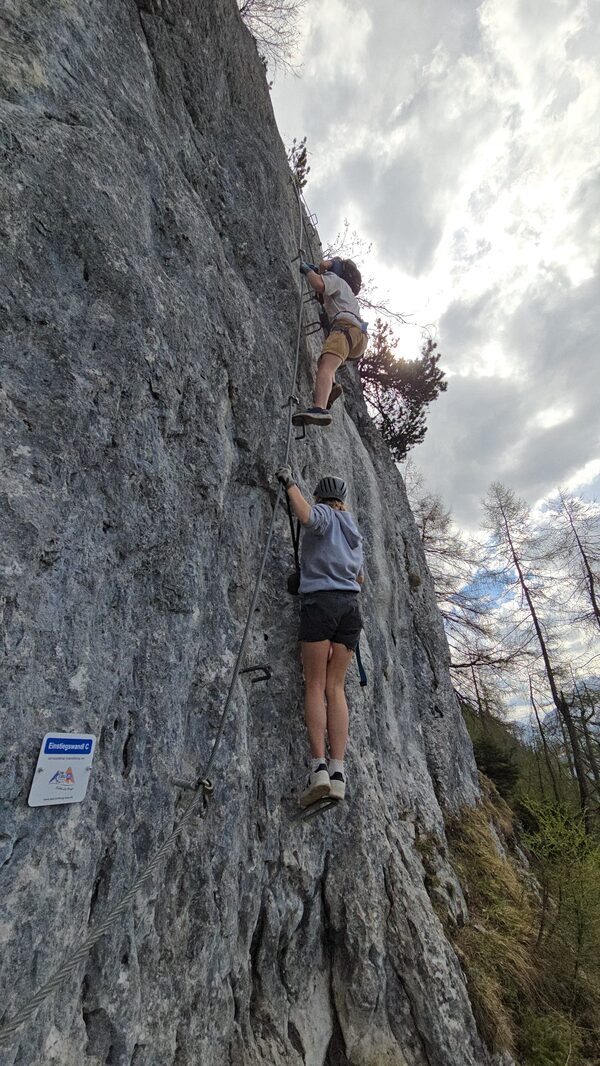
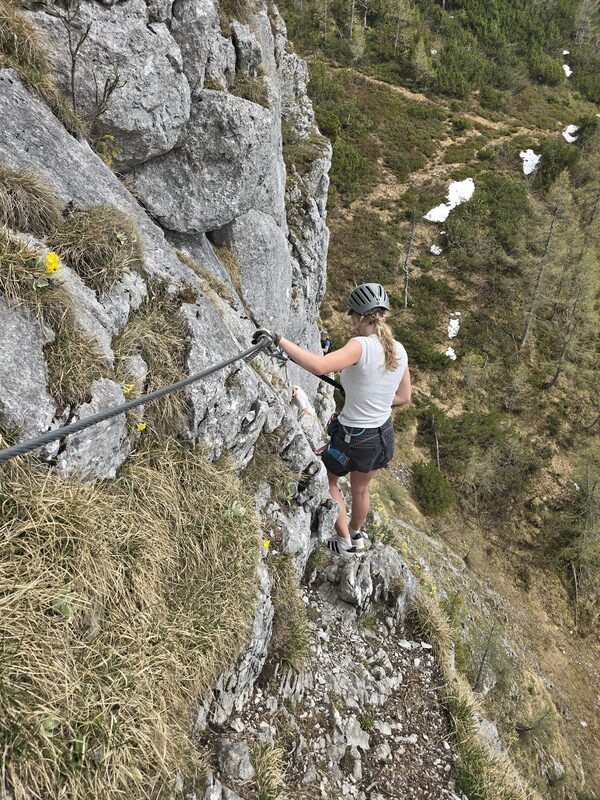
The via ferrata route we took was a real adventure. A via ferrata is a protected climbing route with fixed steel cables, and climbers wear harnesses, helmets, and lanyards that clip into the cable as they move along the rock. We rented helmets and harnesses for the excursion, and unlike some guided attractions, the via ferratas here did not have a separate admission fee. We did have to pay for the gondola, although some people simply hike up instead, which seems impressive and slightly unnecessary when a gondola exists.
The route was absolutely incredible. We were literally scaling cliff walls while clipped into the cables, moving along the mountainside with exposure below us and views stretching in both directions. The first half was more difficult, with sections that felt like category C and D, while the second half eased into more category A and B terrain. It demanded focus, strength, and a willingness not to look down for too long unless you wanted your brain to ask a few urgent questions.
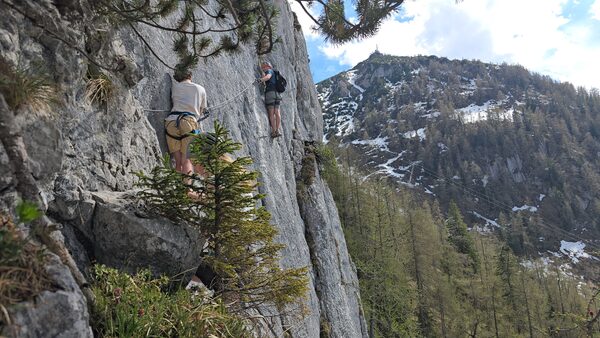
The views were stunning. From the ridge, we could see both sides of the mountain. On one side, the land dropped toward Königssee and the national park. On the other, the Bavarian Alps stretched away in rugged layers. The cliffs, cables, iron steps, and open air made the whole experience feel wild and unforgettable.
Teyauna and Zakary handled it with courage, and it became one of those family adventures that instantly separates itself from a normal sightseeing day. We were not just looking at mountains. We were attached to one.
Königssee’s Crystal Waters
Meanwhile, Kirsten and Cheryl spent the afternoon on Königssee, the famous crystal-clear alpine lake surrounded by steep mountain walls. The water there has a deep green color, and the mountains rise so dramatically around it that the lake feels almost hidden from the rest of the world. Boats glide across the surface, and the whole place has a quiet, reflective beauty.
From the lake and surrounding area, you can also sense the complicated history of nearby Obersalzberg and the Eagle’s Nest, or Kehlsteinhaus, high above Berchtesgaden. The Eagle’s Nest was built during the Nazi period and remains tied to that dark history. Today, it stands as a reminder of the destructive ideology and power structures that once centered in this region. The contrast is sobering: one of the most beautiful alpine landscapes in Europe also carries the weight of some of the 20th century’s darkest history.
That contrast makes Berchtesgaden feel deeper than simply “pretty mountains.” It is peaceful now, with boats on the lake, hikers on trails, climbers on cliffs, and families eating ice cream in village streets. But the landscape also asks visitors to remember. Beauty and history sit side by side here.
For Kirsten and Cheryl, the lake was the perfect way to enjoy the area without pushing Kirsten’s ankle further. For the rest of us, the via ferrata was an adrenaline-filled climb through one of the most beautiful mountain settings we had seen.
By the end of the day, we had experienced Berchtesgaden in two completely different ways: from the cliff wall and from the water. One group had helmets, harnesses, cables, and shaky legs. The other had a boat, mountain reflections, and a calmer afternoon. Both had the same unforgettable backdrop.
It was an amazing day: alpine air, gondola views, cliffside climbing, paragliders launching from the heights, crystal-green lake water, towering mountains, and the strange mixture of peace and history that makes Berchtesgaden such a powerful place to visit.