
April 19, 2026 • Norm
Day 1 — Arrival in Paris: Jet Lag, Bones, and the Eiffel Tower at Night
Saturday, April 18, 2026 – Sunday, April 19, 2026
We left home on Saturday, April 18, 2026, and arrived in Paris on Sunday, April 19, 2026, carrying that unmistakable first-day-of-international-travel feeling: excitement, wonder, airplane hair, mystery crumbs in our backpacks, and the faint sense that our bodies had been folded into economy-class origami.
After landing, we took a taxi to the hotel, and the first order of business was not the Eiffel Tower, not croissants, not even coffee. It was survival. We entered the room, closed the curtains, and collapsed into a family nap like four people who had just completed an athletic event called “Sitting Upright for Too Many Hours.”
All four of us slept for about three hours. When it was time to wake up, nobody was particularly interested in rejoining civilization. The room had gone dark, the beds had become suspiciously comfortable, and the idea of Paris outside the window had to compete with the powerful pull of pillows. But Normand had booked something, which meant Paris was not going to let us hide under blankets on our very first day.
Into the Catacombs of Paris
So we got ourselves up, attempted to look like functioning humans, and took the metro to the Catacombs of Paris.
At first, the catacombs felt like we were simply walking through long underground tunnels. It was damp, quiet, cool, and a little mysterious. Then the experience slowly changed. We put on our headsets, and dramatic narration, background music, sound effects, and actors’ voices began guiding us deeper into the story. Suddenly, we were not just tourists with audio guides. We were descending into an ancient underground world of history, death, memory, and slightly nervous family members.
The audio was excellent. It made the catacombs feel eerie, beautiful, romantic, and a little scary all at once — which is a difficult combination to achieve unless you are in Paris, underground, surrounded by bones, and still a little jet-lagged.
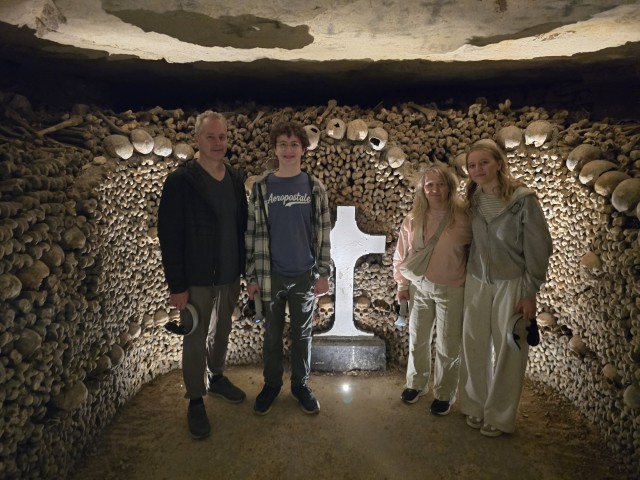
At first there were only tunnels, and we wondered when the famous bone part would begin. Then we reached the ossuary section, and the scale surprised us. It was not one little room of bones. It kept going. And going. And going. Walls and passageways were lined with remains, arranged in patterns that were both haunting and strangely beautiful. It was easy to imagine what it must have felt like long ago by candlelight, deep beneath the streets of Paris, listening to water drip somewhere in the darkness.
For a first-day activity, it was bold. Most families begin with a gentle walk or a pastry. We began with millions of bones. Welcome to Paris, kids.
After the catacombs, Kirsten went to bed early, which was probably the most responsible decision anyone made that day. The rest of us, however, got a second wind — or at least something that resembled a second wind if you did not look too closely — and headed back out into the evening.
A Sunset Walk Along the Seine
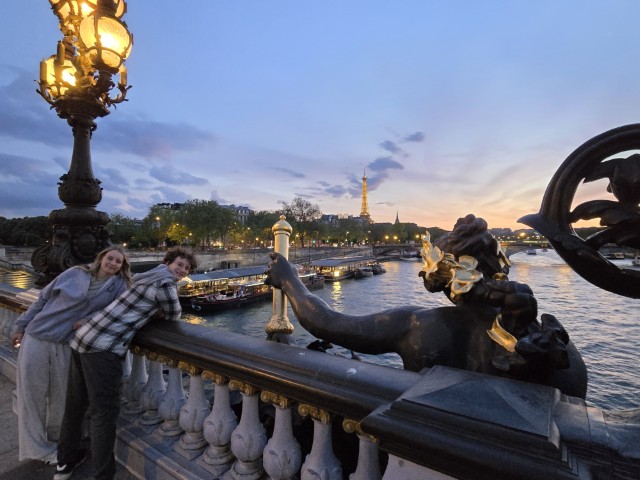
What was supposed to be a short walk turned into a two-hour wander along the River Seine as the sun set and Paris began to glow. The air softened, the water reflected the lights, and the city started doing that thing Paris does where it looks casually cinematic without even trying.
The Eiffel Tower After Dark
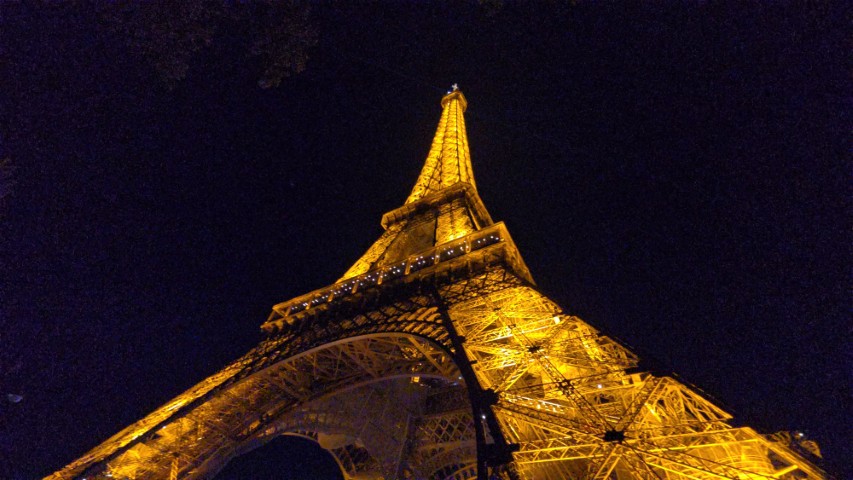
Then came the Eiffel Tower.
From a distance, it looked close, almost as if we were just a few minutes away. But as we walked, it kept growing larger and larger without seeming to get any closer. It was like Paris had placed the Eiffel Tower on a moving sidewalk and set it to “dramatic reveal.”
By the time we reached the Eiffel Tower area, the lights had come on, the spotlights swept across the sky, and on the hour, the whole tower began to sparkle. Even if you have seen it in photos a thousand times, the first real-life sparkle still does something to you. It makes everyone stop talking for a moment. Even tired teenagers.
We walked back to the hotel late, somewhere around 10:30 or 11:00 p.m., ending our first day in Paris with jet lag, underground bones, sunset along the Seine, and the Eiffel Tower twinkling above us. It was not a gentle start, but it was unforgettable — and somehow, despite the nap resistance, we had officially arrived.